Geschwister-Scholl Primary School
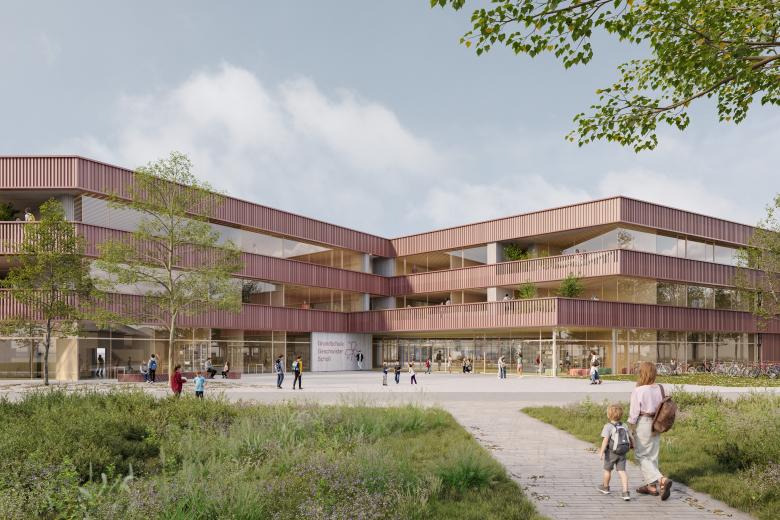
The chairman of the jury, Uwe Wittig, praises the winning design: „The interior layout offers space and flexibility for future-oriented teaching methods and free development.“
The Educational Flower
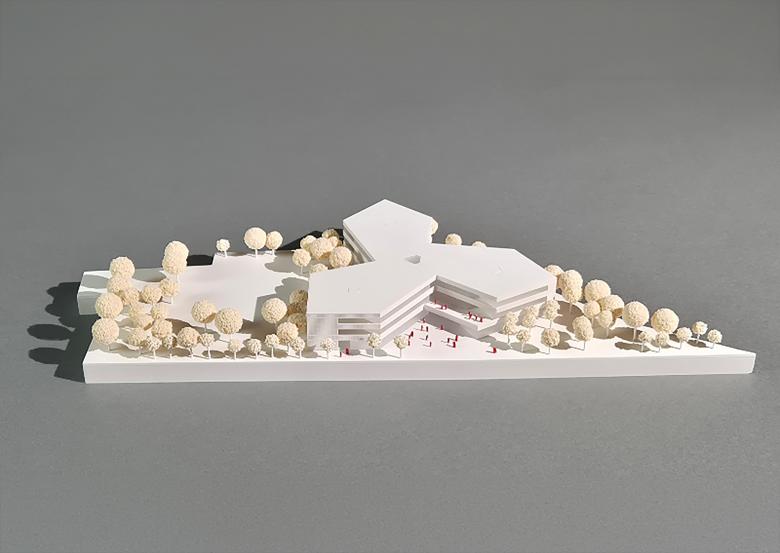
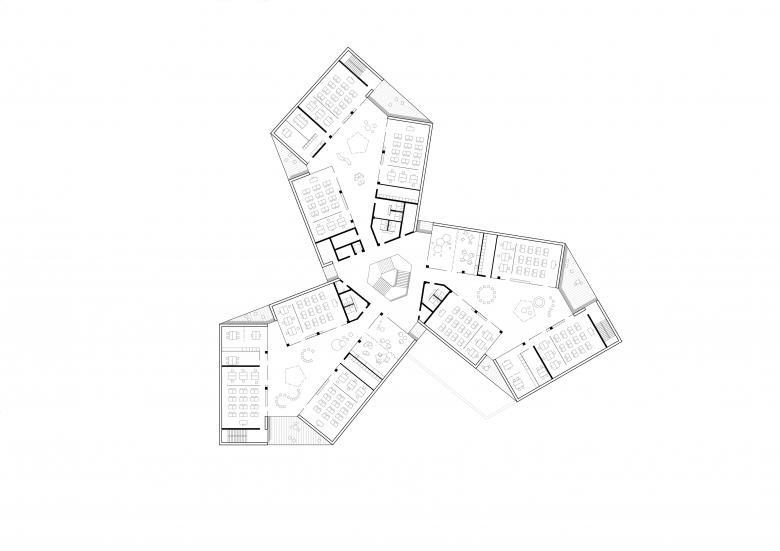
In the open competition for the new construction of the Geschwister-Scholl Primary School in Rathenow, the “Educational Flower” concept prevailed over 148 other designs. The new elementary school in Rathenow is designed as an adaptive building that is oriented towards the existing neighborhood structures. The three-story building opens up high-quality outdoor areas on all sides. They are part of the educational concept: as spaces for movement, as places of encounter, as an interweaving of indoor and outdoor spaces. The ground floor houses communal areas such as the cafeteria, library, and multipurpose rooms. The two upper floors are divided into clear units for general teaching. Each compartment forms a small school community with its own center and short paths.
Space and Function
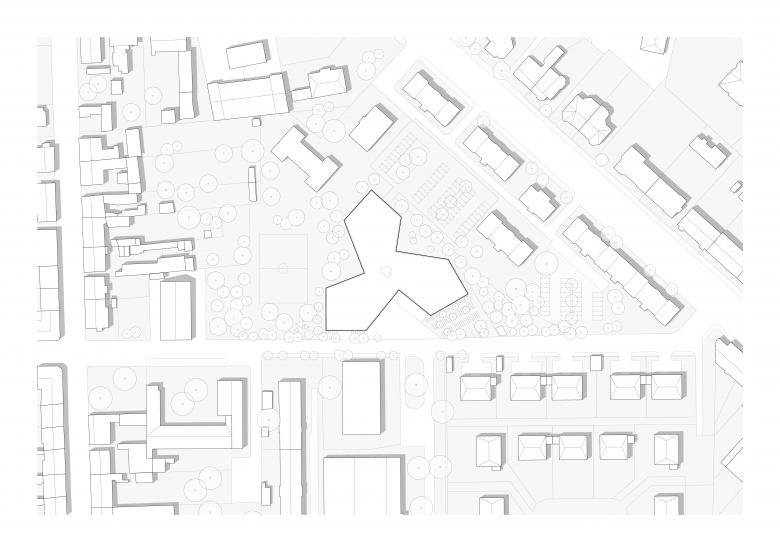
The positioning of the school on the site allows the existing open spaces and sports areas to be retained. Areas that are no longer needed will be unsealed and redesigned as suitable play areas for the children. The placement of the building creates differentiated outdoor spaces in the immediate surroundings: an inviting courtyard, a terrace in front of the multipurpose hall and cafeteria, and a school garden connected to the exercise room. Terraces and loggias, accessible via the forums of the compartments, extend the amenities to the upper floors.
Structure and Surface
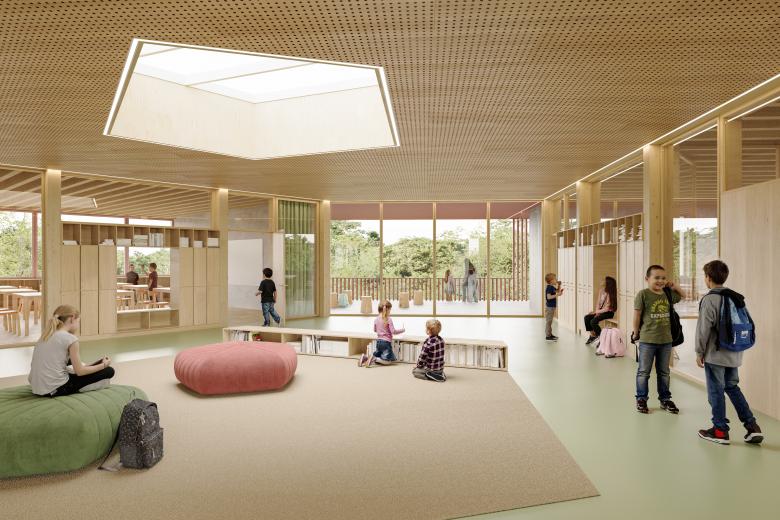
The school is planned as a timber construction. The supporting structure consists of glulam columns and beams. Ceilings and walls are made of prefabricated wooden elements, creating a warm atmosphere and enabling short construction times.
The wooden surfaces remain largely visible in the indoor area, creating a warm, friendly atmosphere. Additionally, easily recyclable materials are used. The color of the red-glazed larch wood facade is reminiscent of the city's brick buildings and refers to the natural building material.
Openness and Orientation
The educational building works with open space concepts that allow for both encounters and privacy. Learning landscapes, marketplaces, and spacious multifunctional zones promote flexible use in everyday life , depending on the mood, learning style, or group constellation. The compartment principle simultaneously ensures clear structures. Manageable units with short distances create spaces that support children in their development. Open, but not arbitrary. Each area offers different zones, from quiet work to playing together.
Inside and Outside
Three compartments are arranged around a common center, which serves as an access zone connecting all areas. Each compartment is independently organised and offers space for retreat, group work, and collaborative learning.
The school's open spaces are structured by the arrangement of the building. Terraces on the first floor offer additional outdoor recreation areas. Green loggias extend the compartments outward and strengthen the connection between indoor and outdoor spaces.
- Year
- 2026
- Project Status
- Design
- Team
- Martin Belkovsky, Julian Heinen, Dorotea Malnar, Iva Maneva, Přemysl Zhoř
- Competition 2026
- 1. Price