P080 | Aufnahmegebäude Bahnhof Stadelhofen
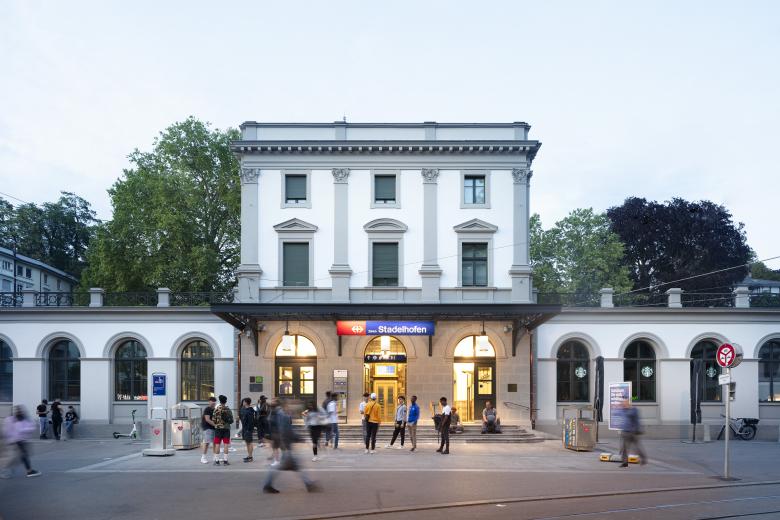
The reception building of Stadelhofen Station was built in 1894 by Gustav Wülfke, a pupil of Gottfried Semper. As head of the structural engineering department, Wülfke was responsible for a number of station buildings for the former Swiss Northeastern Railway. The typology of the late classical building drew inspiration from the Tuscan villas popular at the time.
In 1924, the building was extended by two bays, and the lateral summer waiting halls were removed. In 1991, the reception building was extensively renovated by Arnold Amsler. Apart from the external masonry, none of the original substance was preserved. It was not until 2001 that the building was listed – in conjunction with Santiago Calatrava’s station arcade.
Our task was to restore the façade in accordance with heritage conservation principles. However, the base layer of colour was highly heterogeneous. In 1991, the plaster of the side wings had been removed, and the natural stone of the central risalit had been bush-hammered at a later stage. Interior granite claddings had reduced the breathability of the walls. The original colour scheme could therefore no longer be reconstructed. Arnold Amsler had opted for very subtle blue tones. In collaboration with the heritage authorities and Fontana & Fontana, we developed a colour concept more closely aligned with the earthy tones of the Semperian era. The side wings, added in 1924, were deliberately contrasted more strongly, and the relief of the damaged natural stone was visually corrected using a glaze technique.
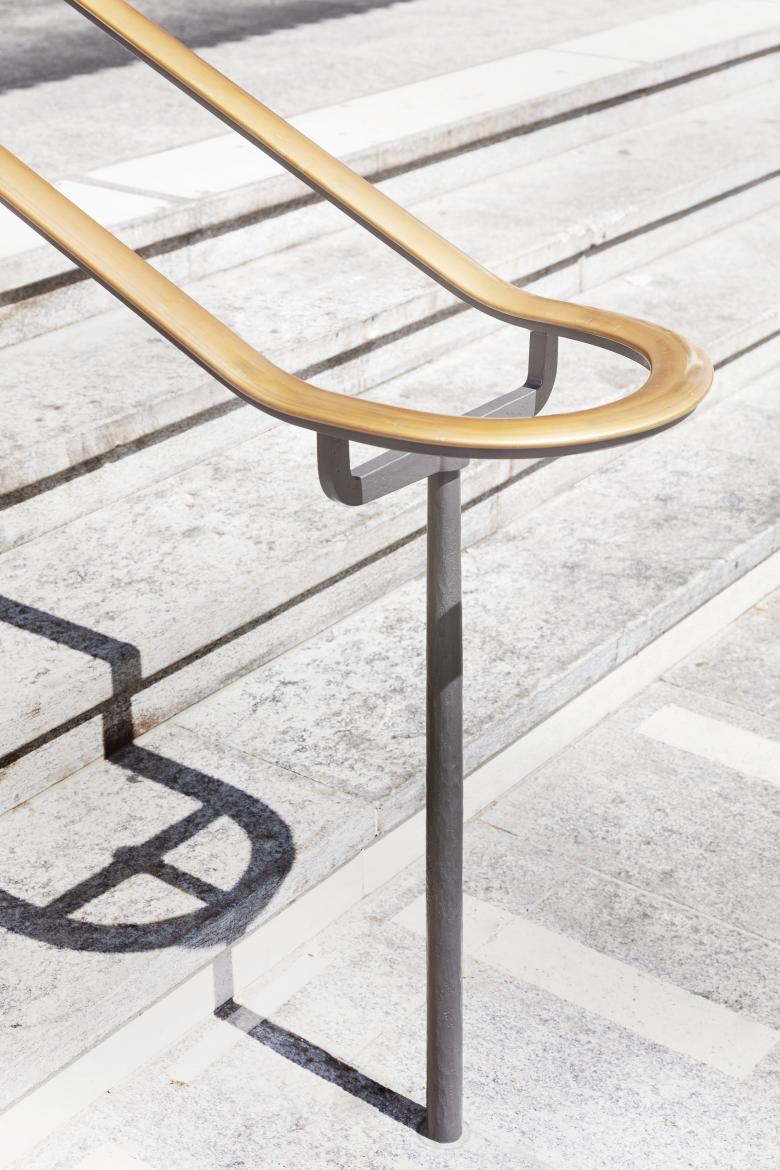
An important part of the project was to extend the façade lighting from the square side to the side façades. Our concept followed the criteria of the Plan Lumière. The freestanding building was to be perceived as a three-dimensional volume even at night. Non-original light fixtures were removed, and new pendant lights beneath the canopies now define the space below. Makeshift railings were replaced with forged ones that gently echo the existing formal language.
Special challenges of this project included the proximity of the construction site to the railway and the high pedestrian traffic, both of which had to be carefully addressed during the planning process.
- Year
- 2018
- Client
- Schweizerische Bundesbahnen SBB AG