Suzhou Museum of Contemporary Art
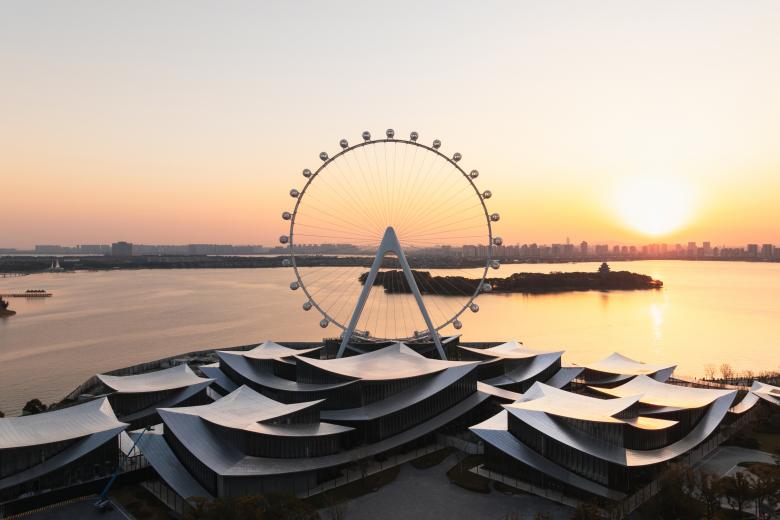
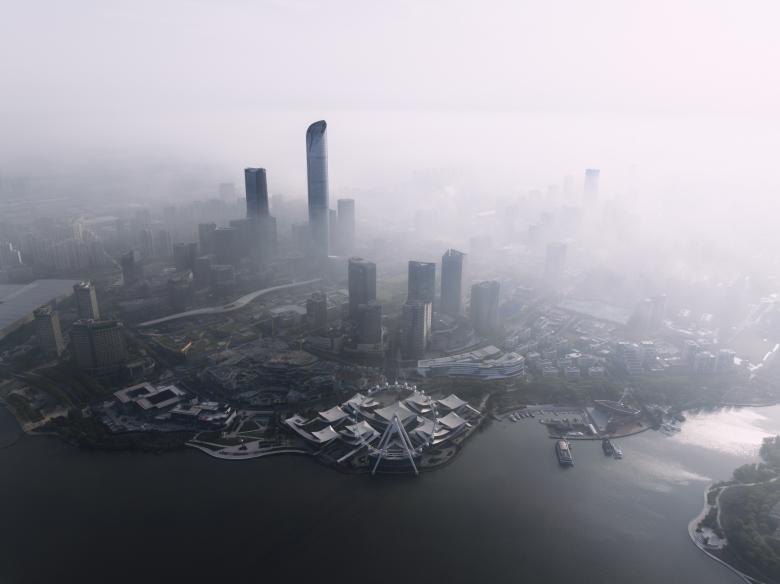
Commissioned by Suzhou Harmony Development Group and designed by BIG-Bjarke Ingels Group in collaboration with ARTS Group and Front Inc., Suzhou MoCA is located along the Jinji Lake waterfront as a new venue for contemporary art, design, and public life in China. The museum will officially open its doors to the public in 2026.
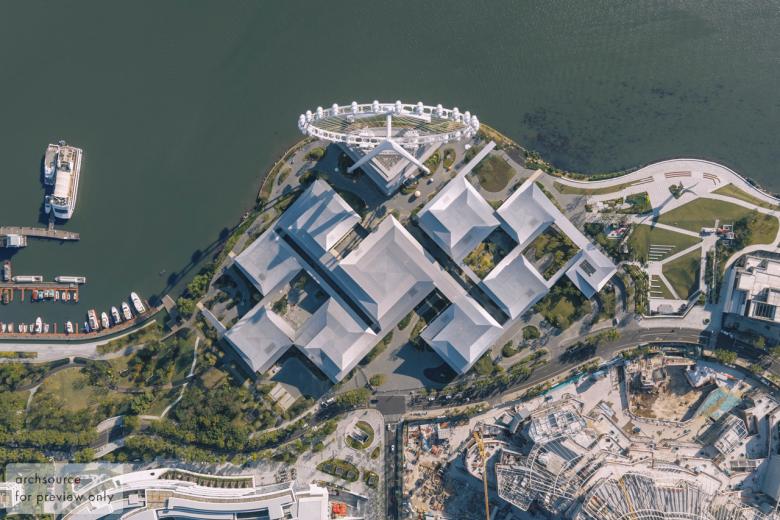
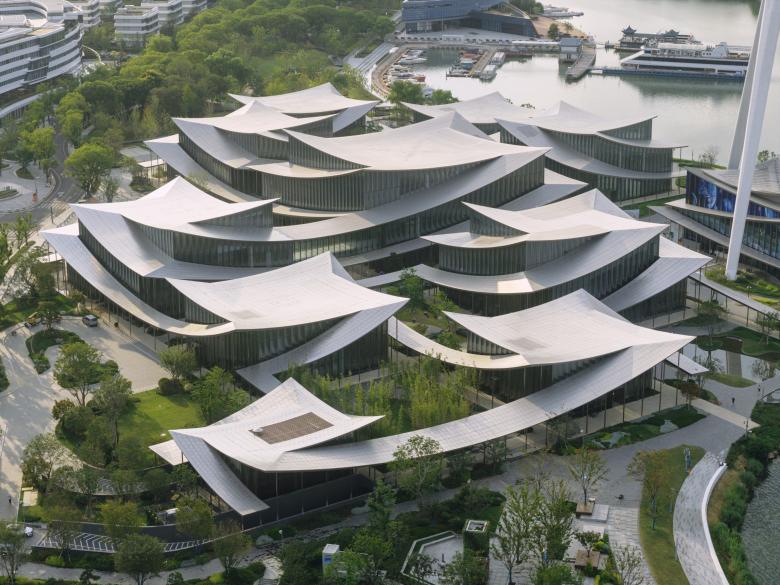
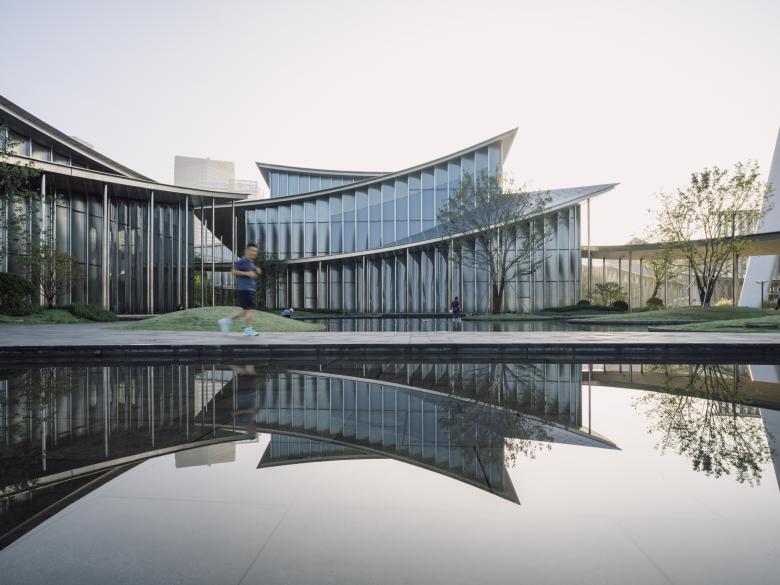
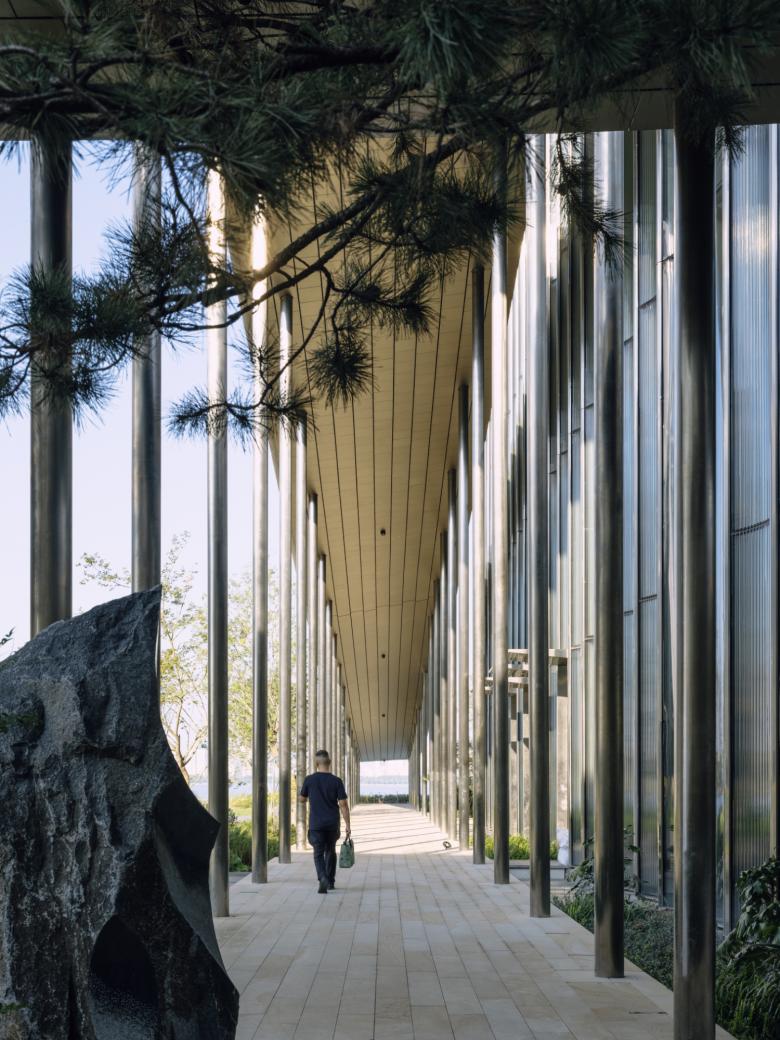
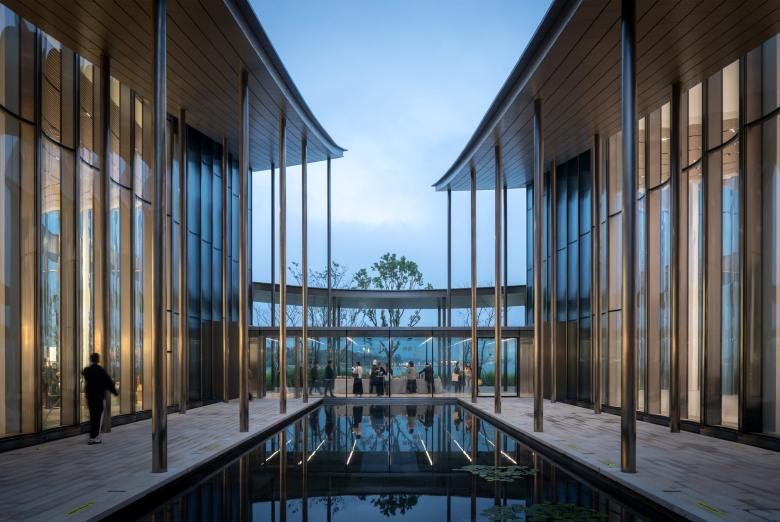
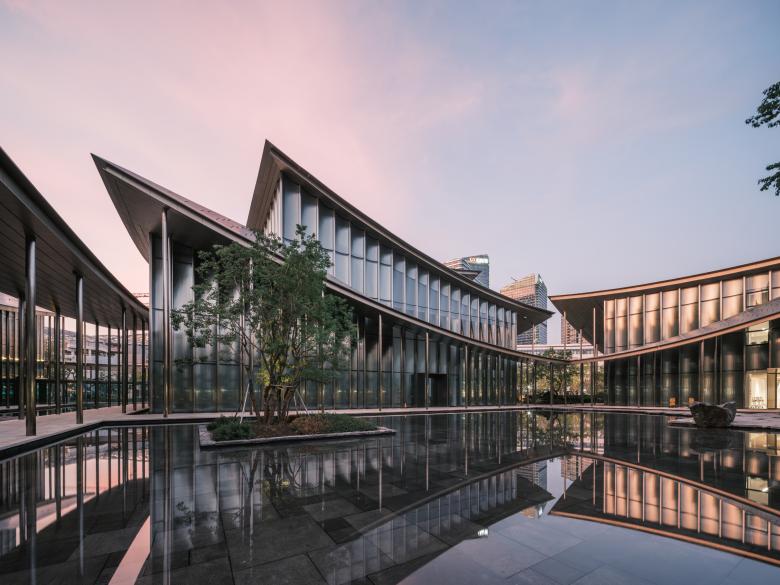
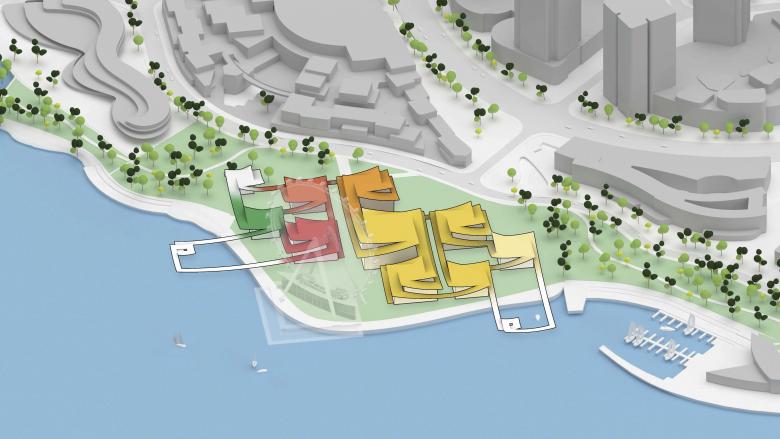
The architecture of the museum is rooted in the tradition of Suzhou’s gardens by reimagining the ‘lang’ 廊- a long, covered corridor that traces a path. Ten interconnected pavilions are unified beneath a continuous roof whose gentle undulations recall the silhouette of tiled eaves. The remaining two pavilions will be built next year, extending over Jinji Lake and linking to the main structure via covered pathways.
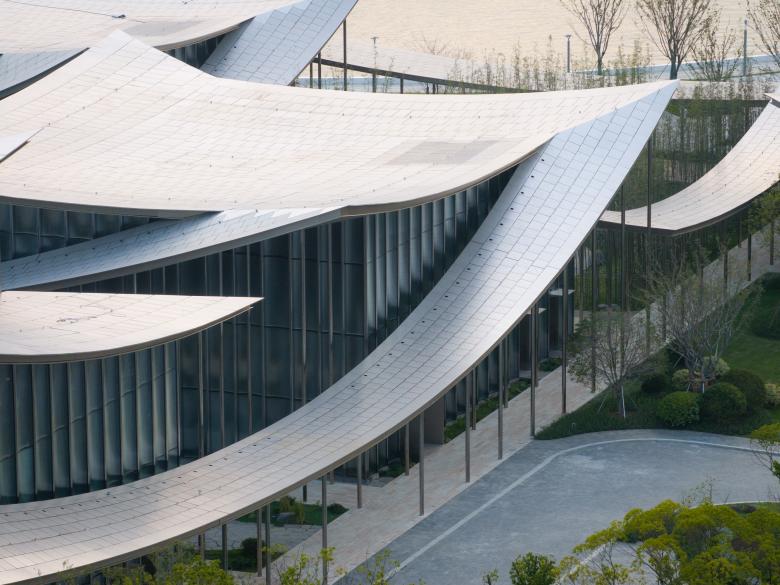
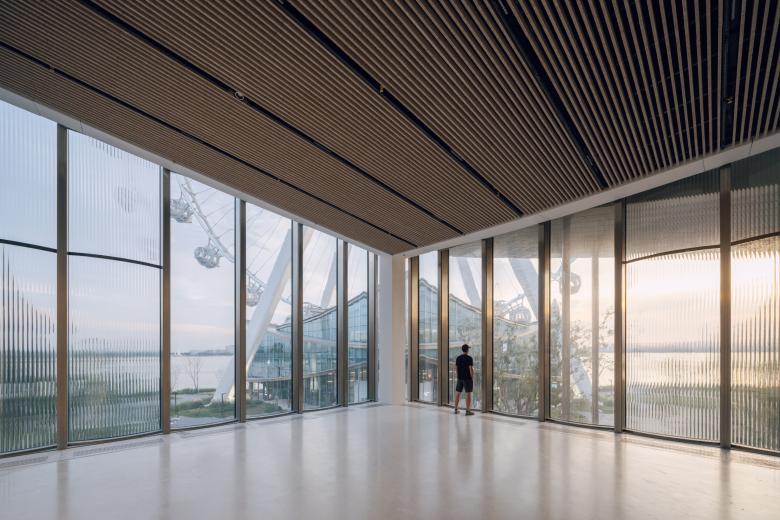
Clad in rippled and curved glass and warm-toned stainless steel, the façades reflect the surrounding sky, water, and gardens - blurring the boundaries between architecture and the natural environment. The pavilions are connected above and underground via bridges and tunnels, offering the museum flexibility to manage circulation according to seasons and exhibitions. Together, the rooms frame a sequence of gardens and courtyards, guiding visitors on a journey that intertwines art, history, nature, and water.
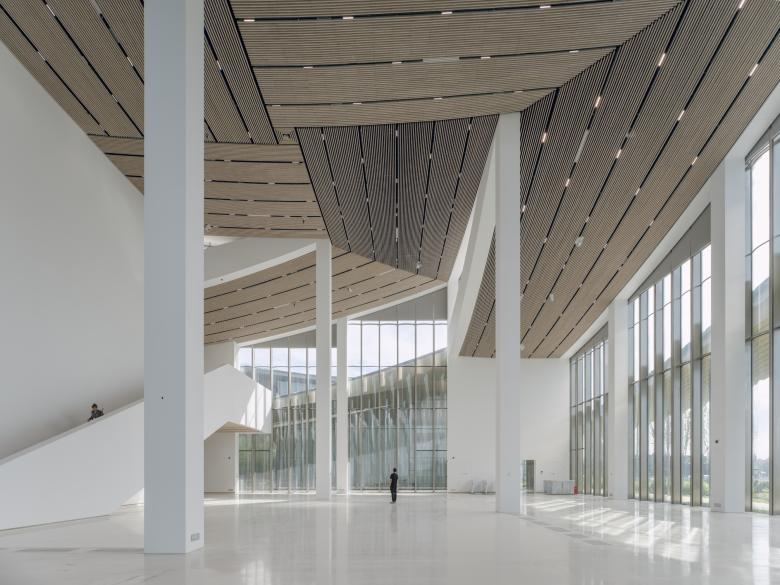
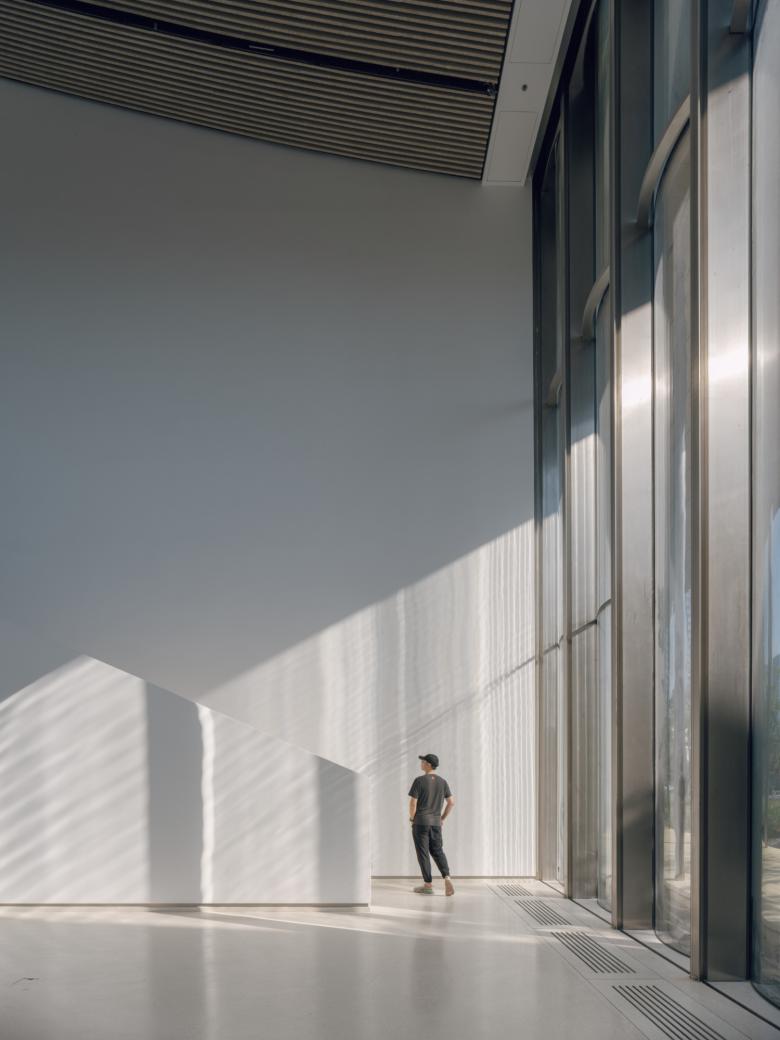
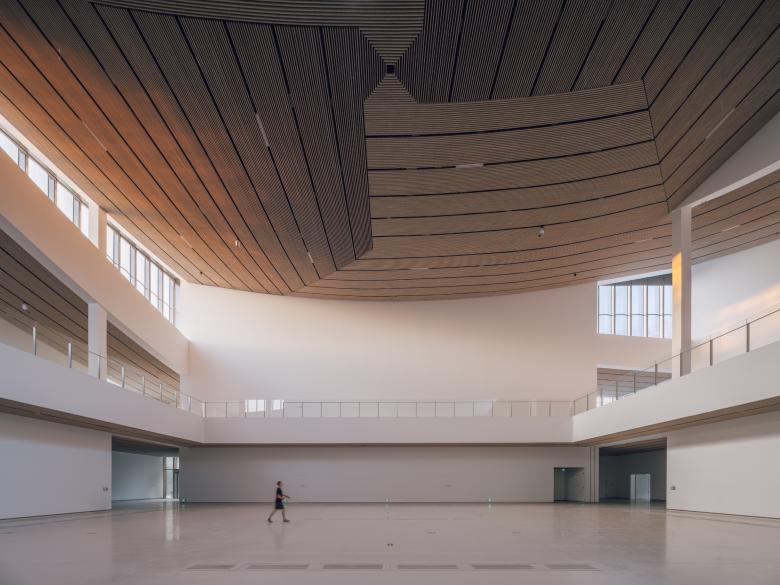
Arriving at the museum, visitors are welcomed by an expansive plaza in front of the Visitor Centre. From here, museumgoers can proceed inside or explore the grounds, meandering along the walkways that extend out into Jinji Lake, which can be seen from above while on the Suzhou Ferris wheel. Inside, natural light enters through clerestories and skylights, animating the galleries with a play of shadow and reflection.
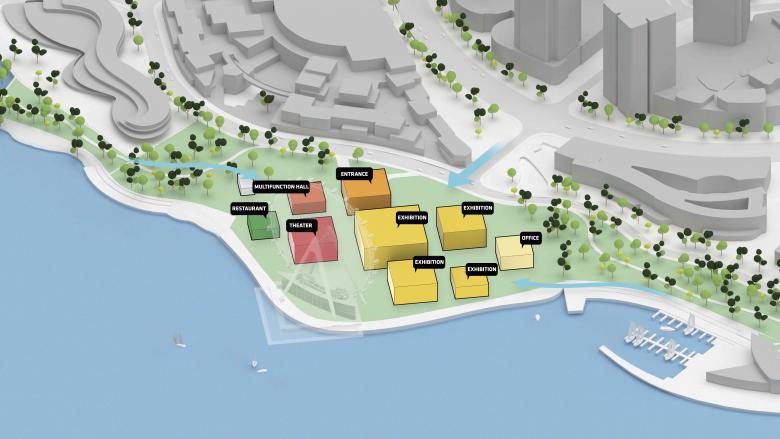
Four of the museum’s pavilions comprise the main gallery experience, while the remaining pavilions include a grand entrance space, multifunction hall, theater, and restaurant. A continuous path guides visitors through the museum, branching off into smaller routes between the galleries.
The museum’s landscape design creates a welcoming public space along Jinji Lake through a series of interconnected gardens. As visitors approach the waterfront, the gardens gradually transition from hardscape to greenery to finally water-themed plantings, reflecting a natural progression from museum to land to lake. Designed to achieve China’s GBEL 2-Star Green Building certification, Suzhou MoCA integrates passive shading, natural ventilation, and locally sourced materials to create a cultural landmark for the city.
The Materialism exhibition expands on Bjarke Ingels’ year-long guest editorship of Italian design magazine Domus, where each issue focuses on a single material. The exhibition explores how stone, earth, concrete, metal, glass, wood, fabric, plastic, plant, and recyclate each shape the firm’s architecture. Large-scale mock-ups and models of 20 BIG projects, such as the studio’s own Copenhagen headquarters, the Danish Maritime Museum, Google Bay View, and The Plus, invite viewers to experience the tactile and spatial qualities that define BIG’s work.
The seating throughout the galleries is made of the very substances on display, creating a full sensory journey through texture and form. Each section’s plaque is crafted from its corresponding medium - including yellow rust stone, rammed earth, and terrazzo – further revealing the varied expressions and possibilities of matter.




- Jahr
- 2026
- Bauherrschaft
- Suzhou Harmony Development Group Co. Ltd
- Team
- Bjarke Ingels, Catherine Huang, Molly Hsiao Rou Huang, Tyrone Cobcroft, Kekoa Charlot, Tseng-Hsuan Wei, Matteo Pavanello, Aileen Koh, Amanda Lima Soares Da Cuncha, Arda Özker Cincin, Athena Morella, Chih-Han Chen, Christian Vang Madsen, Cris Guoyu Liu, Desislava Georgieva, Eddie Can, Eric Wen Tung Li, Federico Martínez De Sola Monereo, Filip Fot, Filippo Cartapani, Finn Nørkjær, Haochen Yu, Huiyao Fu, Izabella Banas, Jakub Kulisa, Jan Magasanik, Jana Semaan, Jason Cheuk Hei Lee, Jiaqi Yang, Jiawen Huang, Julia Wilkosz, Jurica Pajic, Mathis Paul Gebauer, Megan Nhat Xuan Dang, Narisara Ladawal Schröder, Ole Elkjær-Larsen, Oliver Steen, Paula Domka, Pei Huang, Philip Kaefer, Phoebe Cowen, Riad Tabbara, Romain Thijsen, Shu Du, Sol Anaid Chaocon Levin, Tarek Shater, Todor Todorov Rusev, Tomasz Jakubowski, Xavier Thanki, Yanis Amasri Sierra, Yihan Liu, Yingying Guan, Zahra Khademi, Zhonghan Huang, Zuzana Faskova, Andrea Hektor, Adele Scampoli, Alexander Gale Heiede, Andreas Bak, Bjarke Koch- Ørvad, Cristina Minguela, Ingrid Albina Oliva Lampa, Janis Bronka, Jens Max Jensen, Jesús Fernández Lindqvist, Jonathan Russell, Kannan Selvaraj, Konstantinos Koutsoupakis, Maria Capuozzo, Miles Treacy, Thomas Lejeune, Tim Christensen
- ARTS Group Co. Ltd., Front Inc., Shanghai Shuishi Landscape Design Co. Ltd.,
- Collaborators