Chestnut Grove Courtyard at the Foot of Gaofeng Chansi Monastery
Huzhou City, Zhejiang Province, China
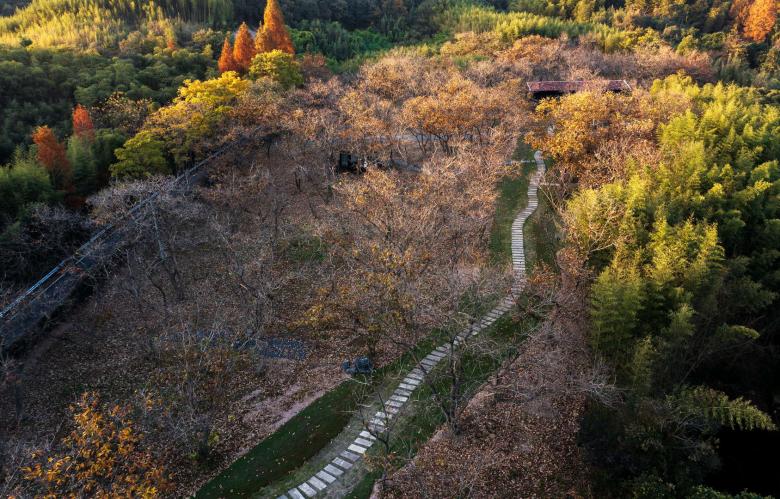
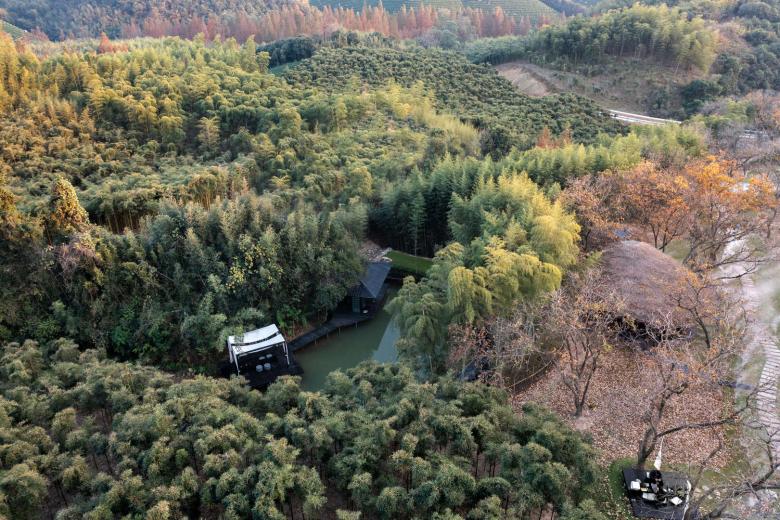
Lilin Coffee is located in Mogan Mountain Scenic Area, Deqing County, Huzhou City, Zhejiang Province. Nestled in a lush chestnut forest, perched on the mountainside, it adjoins Gaofeng Chan Monastery to the north and is surrounded by rolling tea plantations. With natural scenery and humanistic atmosphere blending harmoniously, it boasts an exceptional viewing experience.
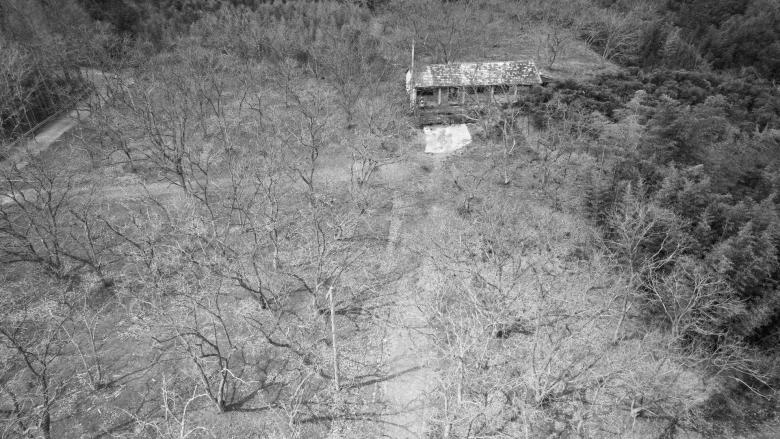
The project was originally an agricultural auxiliary building, left idle from prolonged lack of systematic maintenance. Rural resources like culture, land and architecture often lie sedimented, idle and dormant. Effectively activating these idle assets with new functions and values for contemporary needs is both a core rural revitalization issue and the starting point of this design.
On entering the site, one is embraced by the mountain forest’s tranquility and mist. The layered lush tea hills veiled in swirling mist resemble flowing ink wash; the morning bells and evening drums of Gaofeng Chan Monastery stir the heart, exuding tranquil profound Zen spirit. Wind, bells and forest breath resonate harmoniously in human-nature unity, and this symbiotic beauty of nature and culture defines Zen as the core of our design.
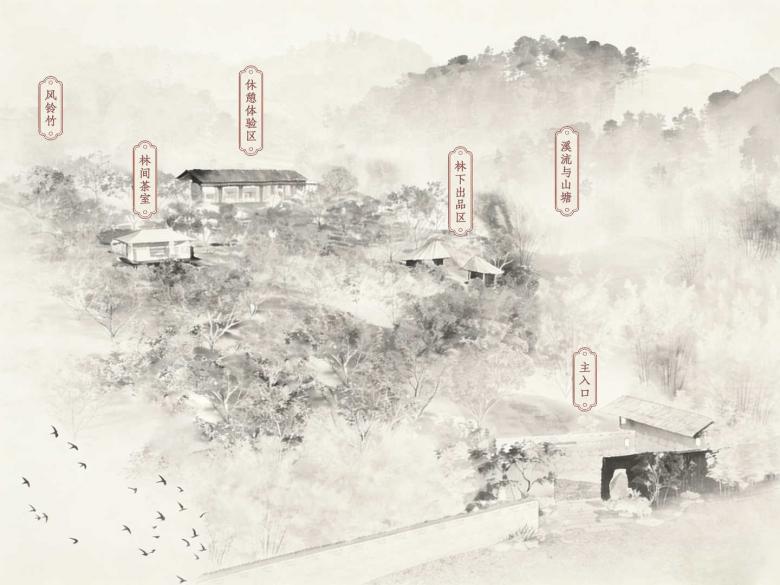
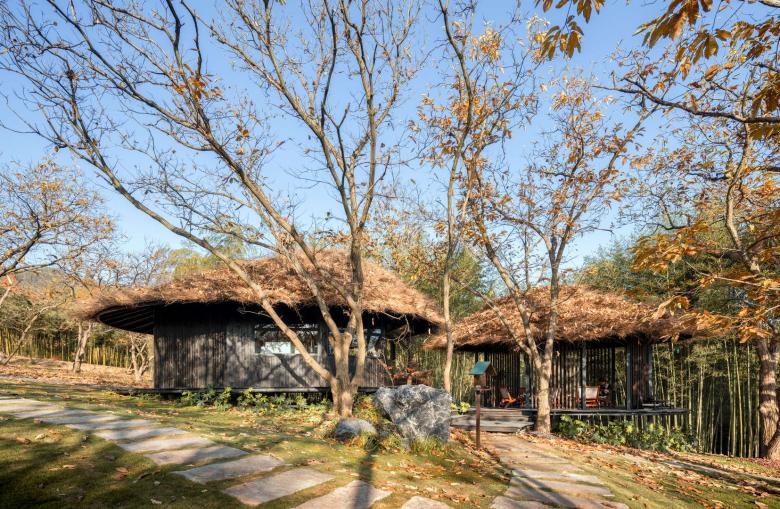
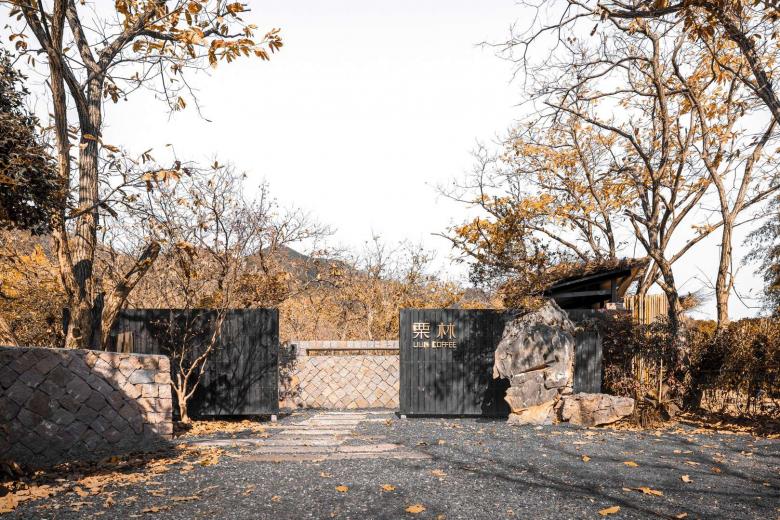
The entrance is designed around “a Zen-inspired arrival”, featuring a stone wall and natural boulders. Flanking chestnut trees frame the space, creating a Zen dialogue of “moving leaves, still stones” against the stone and black wooden walls. A gravel walkway inset with bluestone slabs adds rustic charm, blending natural life with crafted elements.
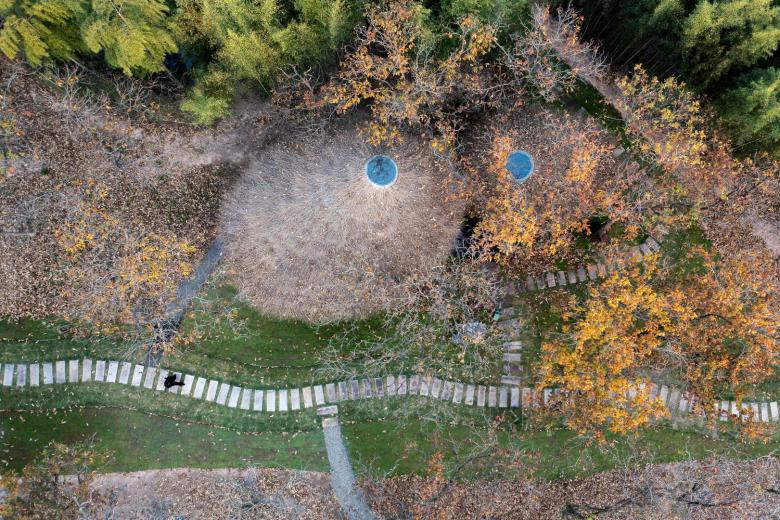
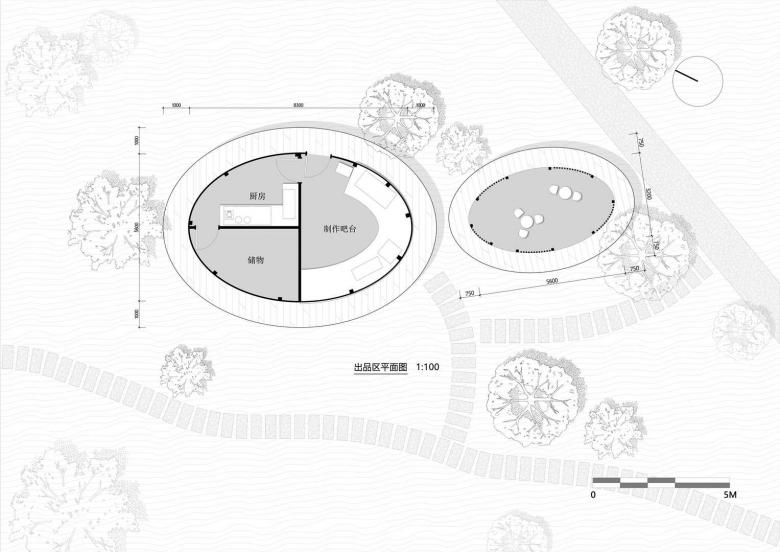
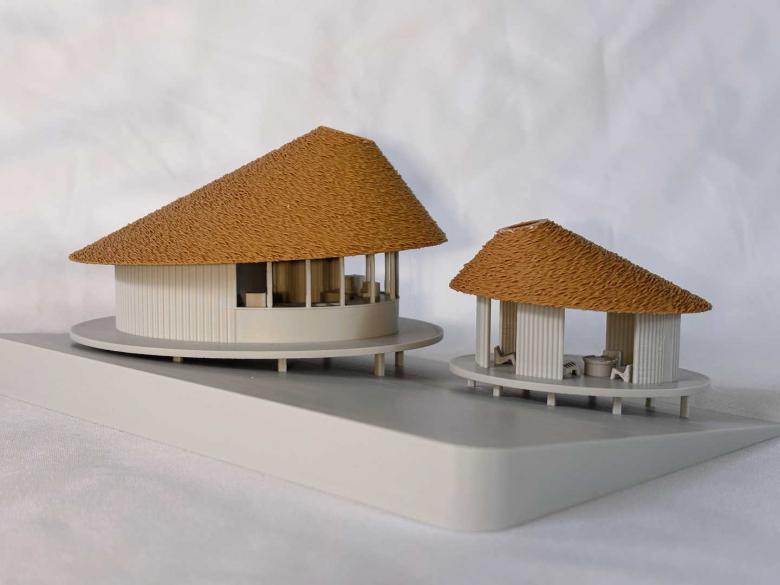
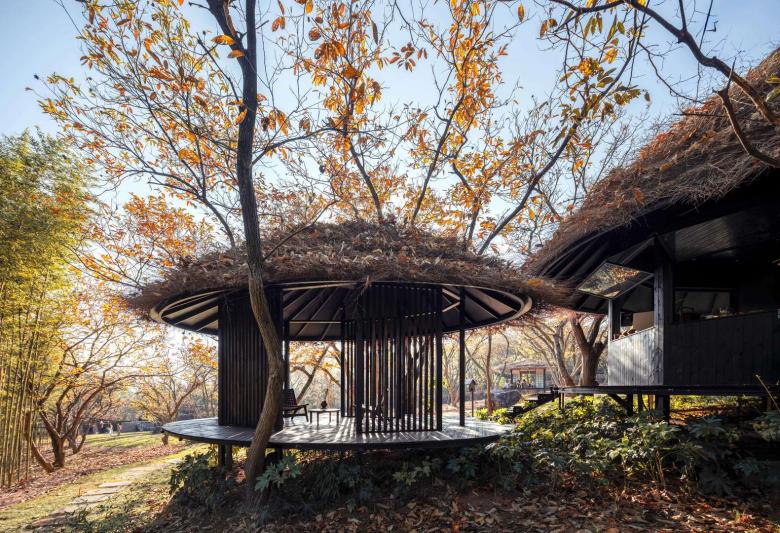
Upon arrival, the Woodland Serving Area comes into view; inspired by the rounded shape of chestnut burrs and echoing the Zen philosophy of harmony and openness, this softly contoured serving & photo spot with bamboo-slat roofing is framed by chestnut groves and bamboo shadows, blending local chestnut forest culture with tea-tasting experiences and inviting visitors to immerse themselves in the harmonious coexistence of nature and humanity with a unique rustic vibe.
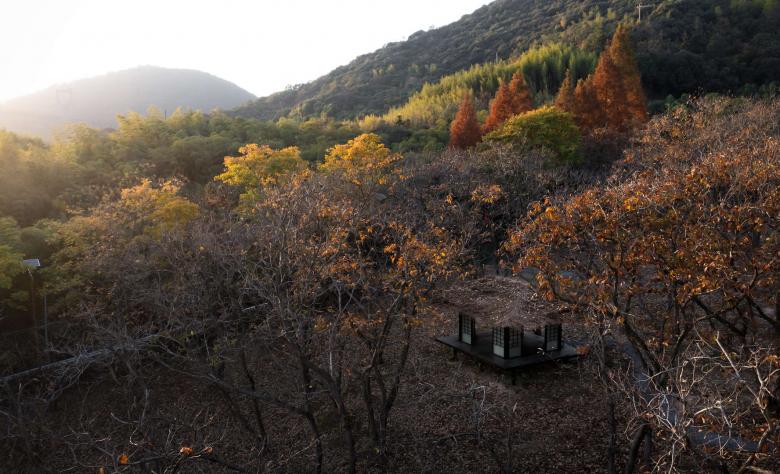
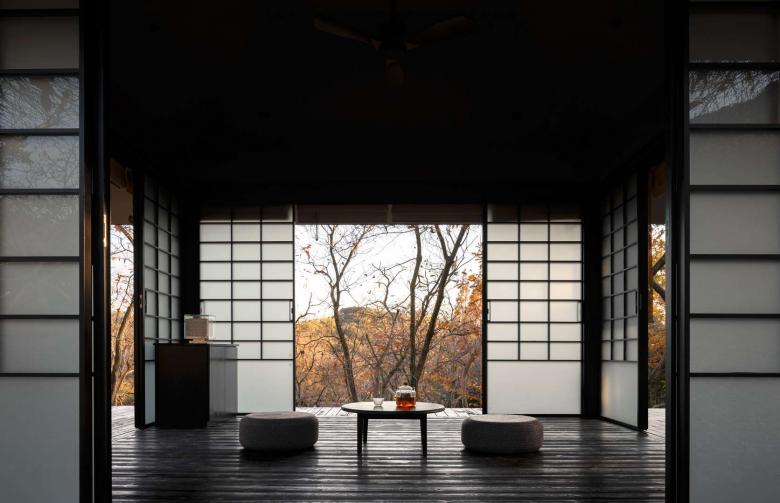
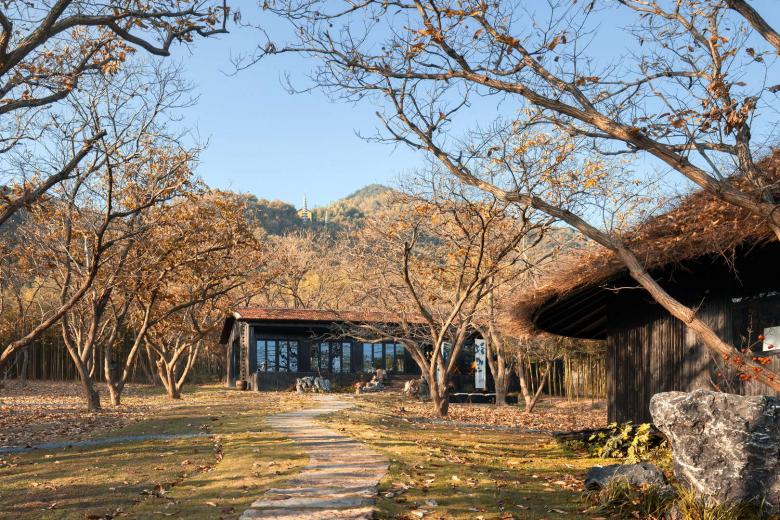
The Woodland Tea House lies opposite the serving area, hidden in the chestnut grove. Designed with the core idea of "blending into nature", it uses an elevated lightweight steel structure to maximize preservation of native vegetation and terrain. From a hillside view, the tea house blends into the wooded slope, blurring the line between man-made structures and nature.
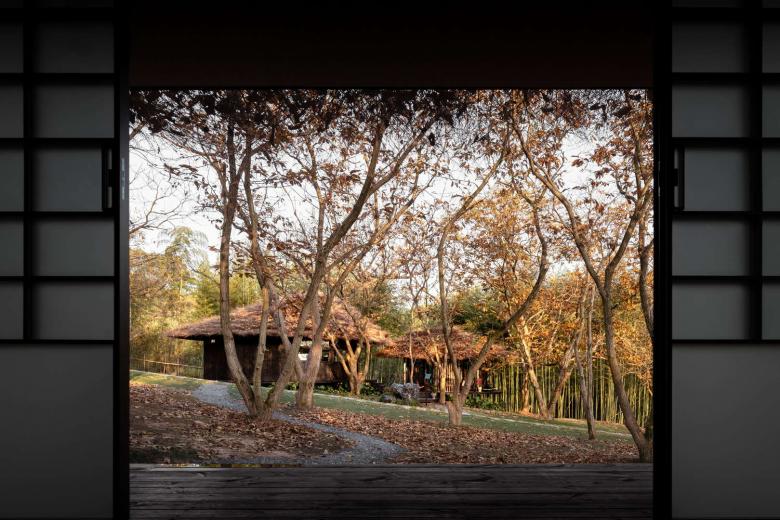
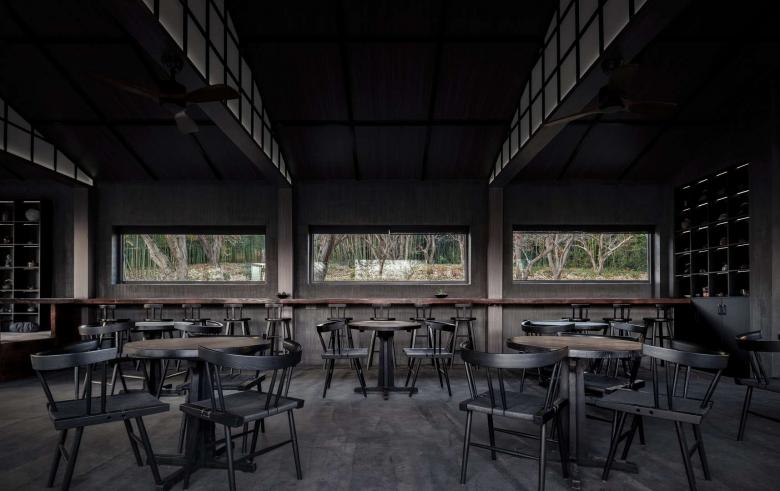
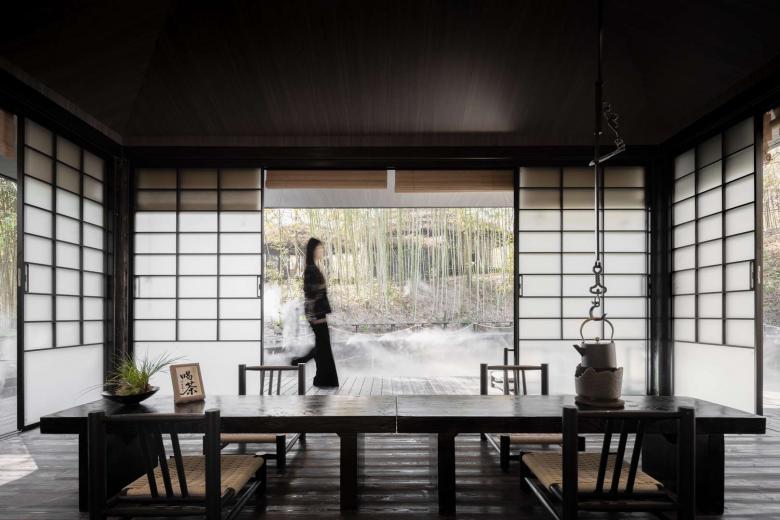
The Woodland Tea House’s interior features a black wood base, with semi-transparent shoji screens dividing the space — balancing tranquility with natural light penetration. Its minimalist layout enhances the Zen vibe, while large openings frame the outdoor scenery. Over tea, visitors fully immerse themselves in the symbiotic beauty of shifting light, shadow and mountain charm.
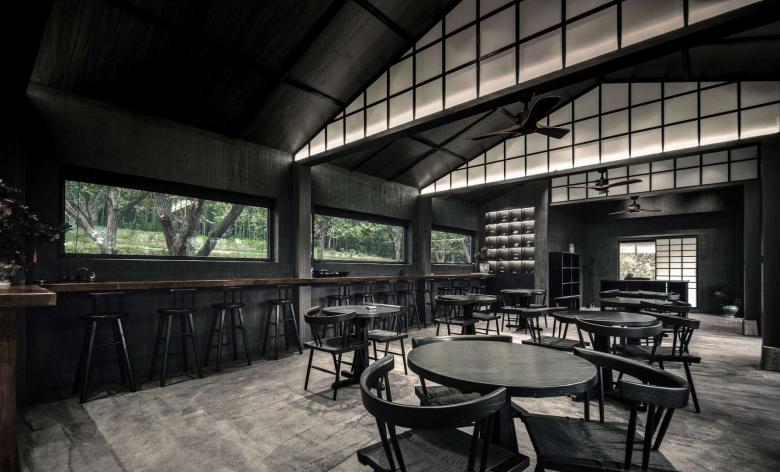
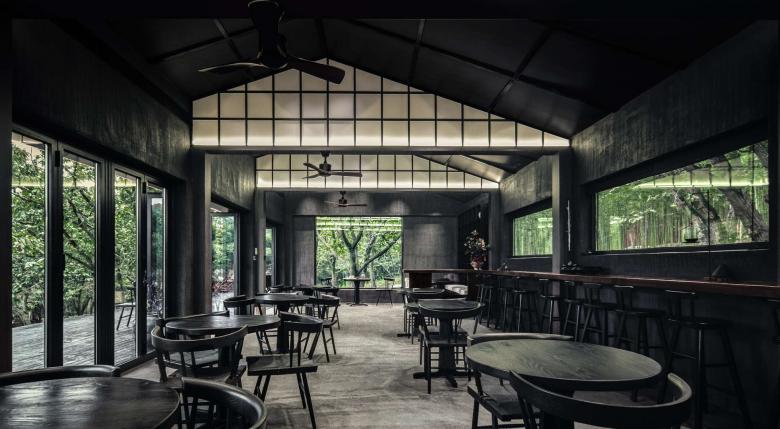
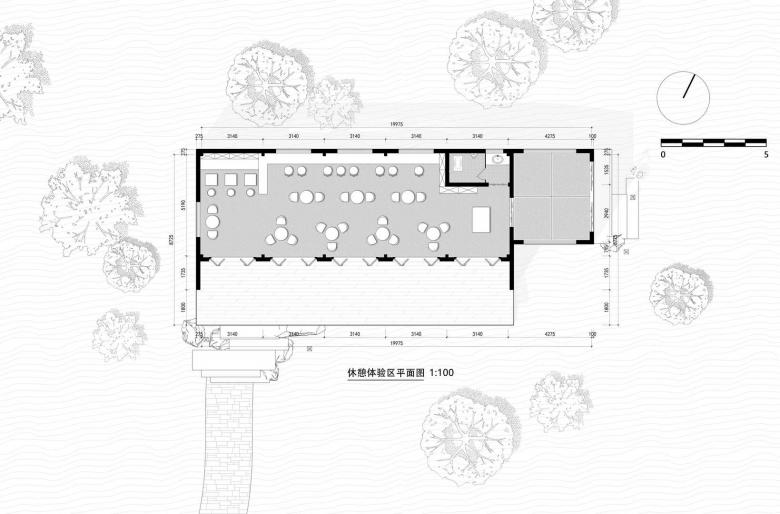
Continuing along the bluestone walkway, visitors reach the Lilin Coffee Rest & Experience Area, where the original sloped roof and architectural form are preserved, with only the exterior wall color and door-window system partially optimized to align with the project’s Zen, natural aesthetic; clad in black wood veneer and framed by large full-height glass windows, the building creates an unobstructed visual corridor, allowing mountain forest views to permeate the interior, blending indoor and outdoor spaces to evoke the tranquil atmosphere of “the house nestled in the forest, the forest embracing the house”.
The indoor space, with a tranquil ambiance, serves both relaxation/check-in and cultural display purposes. A dedicated meditation area allows visitors to rest and meditate, and experience the unique cultural charm in a natural setting, relieving fatigue and achieving physical and mental relaxation.
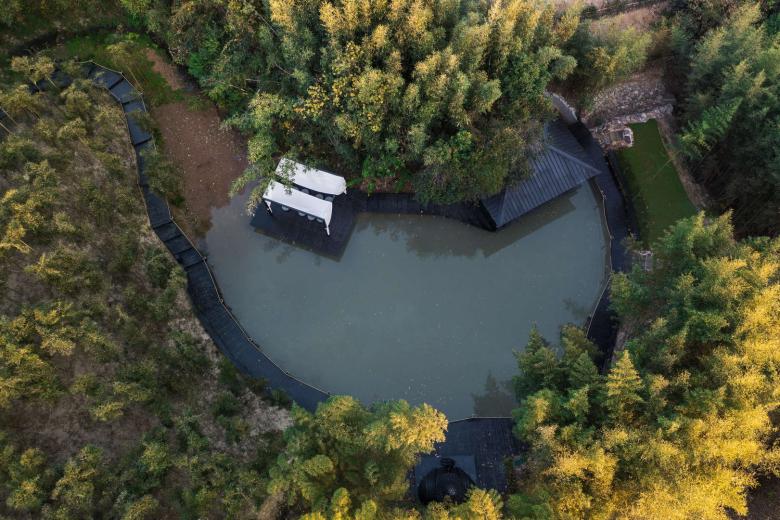
Crossing the bamboo forest east of the Rest & Experience Area, visitors reach the stream and heart-shaped mountain pond on the eastern site. Mountain spring water is channeled to form a meandering stream that follows the natural terrain, flowing into the pond with gentle gurgling sounds to create a rustic Zen atmosphere of forest-water symbiosis, while wooden walkways and platforms invite visitors to immerse themselves in the tranquil, nature-infused setting.
The Wind Bamboo Corridor by the stream is an ideal viewing spot. Light gauze softens the space, mist lingers around, and the Buddha statue looms faintly in haze. Wind chimes tinkle and streams gurgle, bringing you the rustic charm of Moganshan.
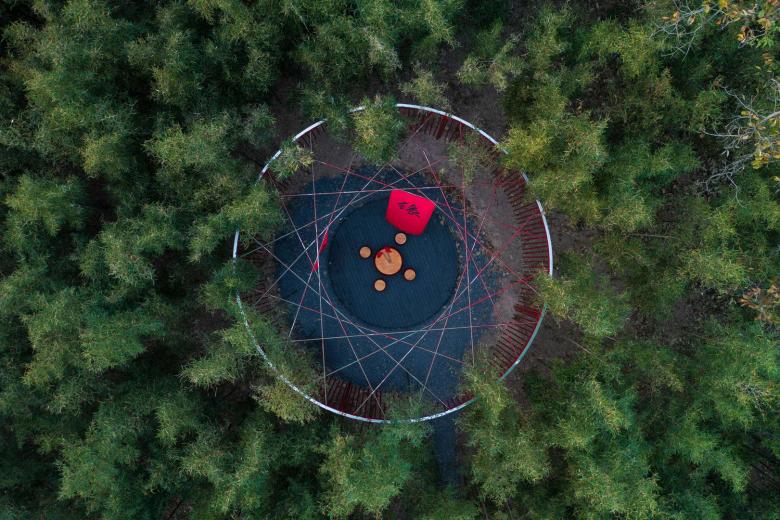
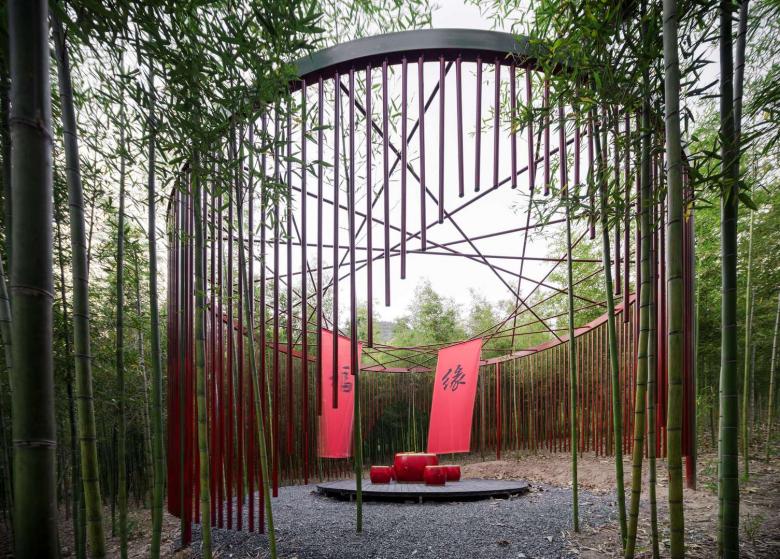
The Wind Chime Bamboo Installation is nestled in a lush bamboo forest, serving as a forest retreat for photo ops and mental relaxation. Its circular layout features red metal rods hanging to mimic bamboo nodes, creating a striking visual dialogue with the forest. As the wind sways the rods, their gentle chimes evoke the lively spirit of wind chimes.
We aim to take Lilin Coffee as a starting point, further refine the model of "idle resource activation + local cultural empowerment + cultural-tourism integration", and make it a model for idle rural resource reuse. This replicable, scalable model will drive more villages to turn idle forests, old houses, and specialty agri-products into eco-friendly, culturally valuable, and economically viable income-generating assets, fostering rural sustainable development via resource circulation.

- Architecten
- Parallect Design
- Jaar
- 2025
- Klant
- Lilin Coffee
- Team
- Parallect Design: Zhang Wenxuan, Jing Wanqian, Li Xiaowei, Hong Jiawen, Liu Yasiyu Soochow University: Yang Nan
Gerelateerde projecten
Magazine
-
 Stem voor Gebouw van het Jaar
Spaces for Cars – And for People
Kennedy & Violich Architecture, Ltd. (KVA) | 02.03.2026 -