Alley Pond Environmental Center
Queens, États-Unis
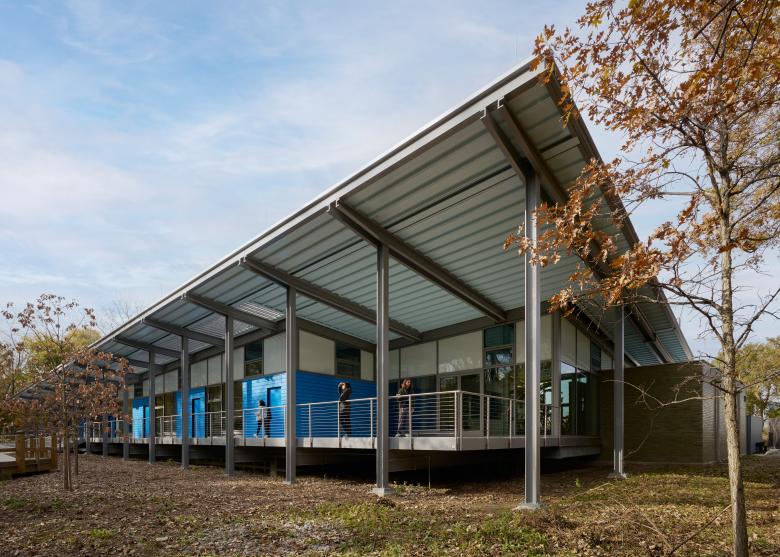
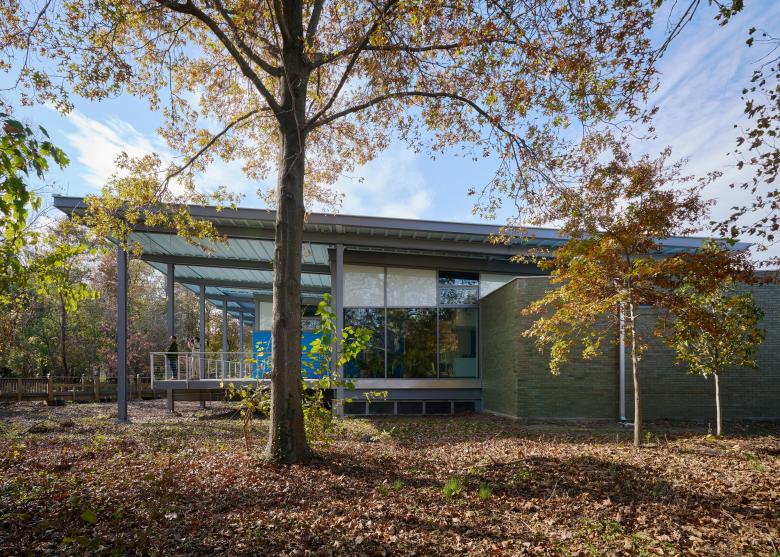
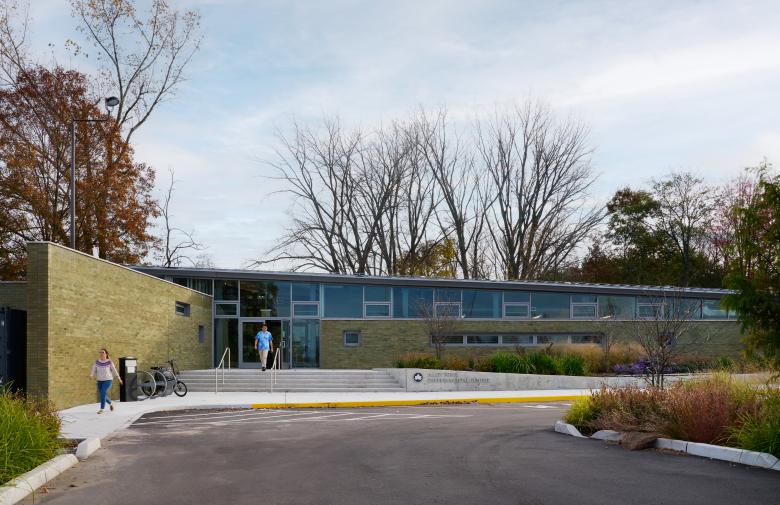
With its organic green brick wall and dramatic sloping roof, the new Alley Pond Environmental Center (APEC) offers an innovative and immersive learning experience to over 100,000 students a year and a new gateway to one of the most beautiful and expansive wetland ecosystems in New York City. Designed in collaboration with APEC educators, board, and staff, the building reflects APEC’s mission of education and environmental stewardship.
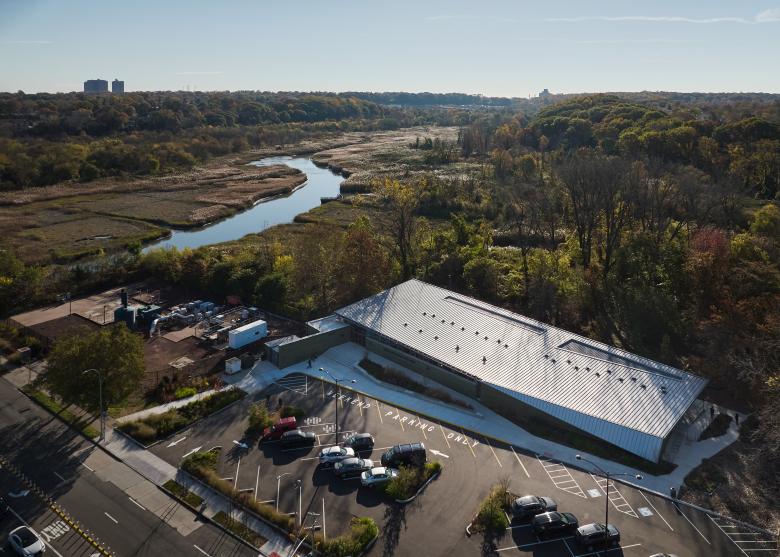
First-time visitors to APEC are always surprised to find this expansive freshwater and tidal wetlands, with abundant plants and wildlife, just off the Northern Boulevard commercial strip. As a gateway to Alley Pond Park, the new building’s dynamic form welcomes parkgoers.
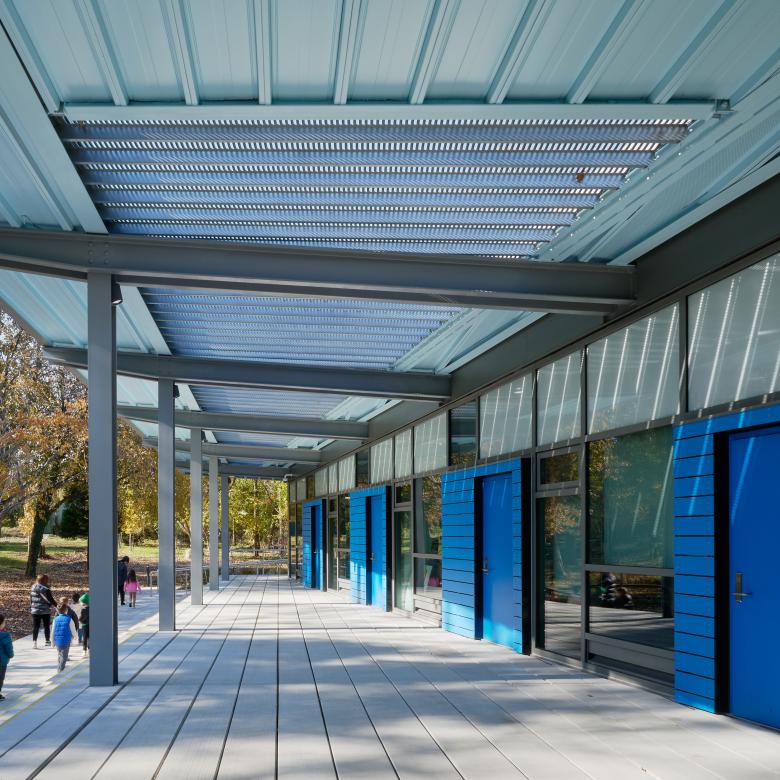
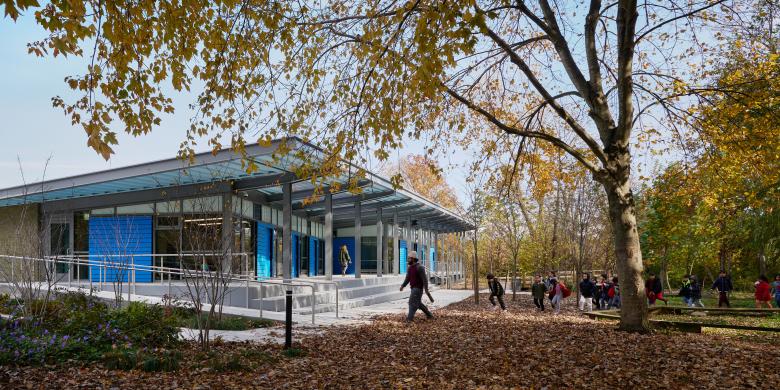
By framing the adjacent Old Douglaston Pumping Station to the east, the design acknowledges the site’s history as a damaged urban ecosystem while aspiring to a hopeful future by providing a welcoming and sustainable facility and a unique NYC park experience. The building location minimizes the impact on wetlands and existing trees, and the ground floor is elevated to resist flooding. The faceted glazed brick wall creates a sound barrier to noisy Northern Boulevard and, depending on the light, evokes animal scales or lichen. The large roof slopes to capture rainwater while creating a lofty and sheltered space toward the park, connecting students and visitors to the adjacent forest and wetlands.
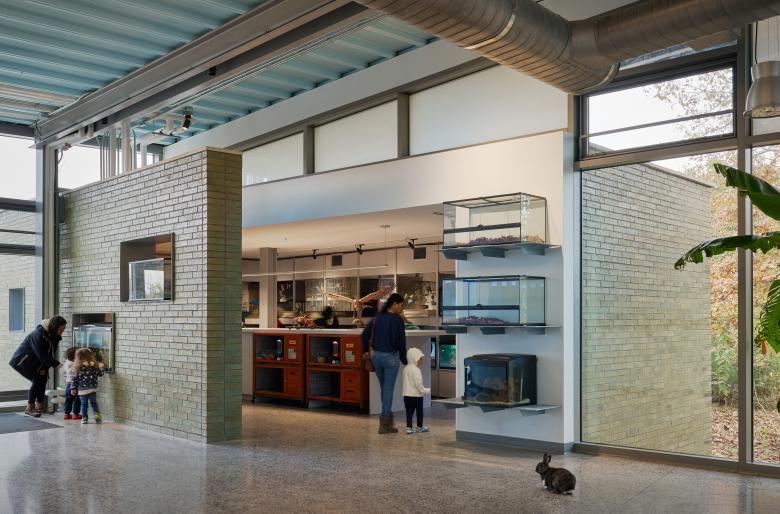
Upon entering the building lobby, visitors can take in a view of the forest. The entry also serves as the launching point for a network of nature trails that allow exploration of Alley Creek, Cattail Pond, and Windmill Pond.
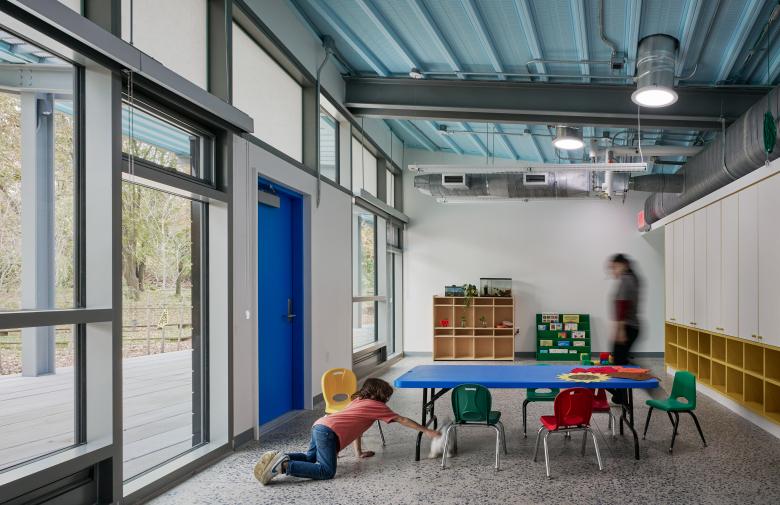
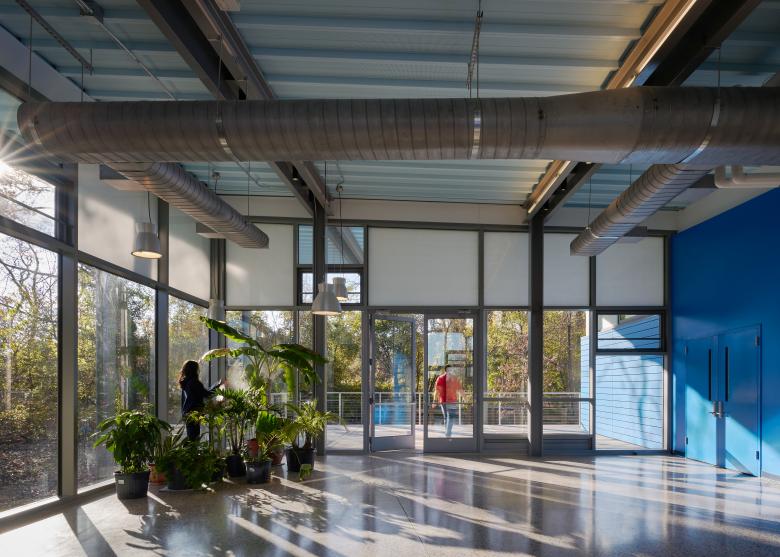
The building maximizes interior and exterior learning space and parking on a very tight site, allowing APEC to expand its capacity. APEC’s famous animal room, traditionally the main attraction, is open to the entry lobby, where the animals welcome visitors directly. Bright and flexible classroom spaces connect students to nature trails and extend outdoors. These classrooms have walls that open to create a single space for events. Exterior classrooms include a sheltered observation deck and stepped seating under the tree canopy.
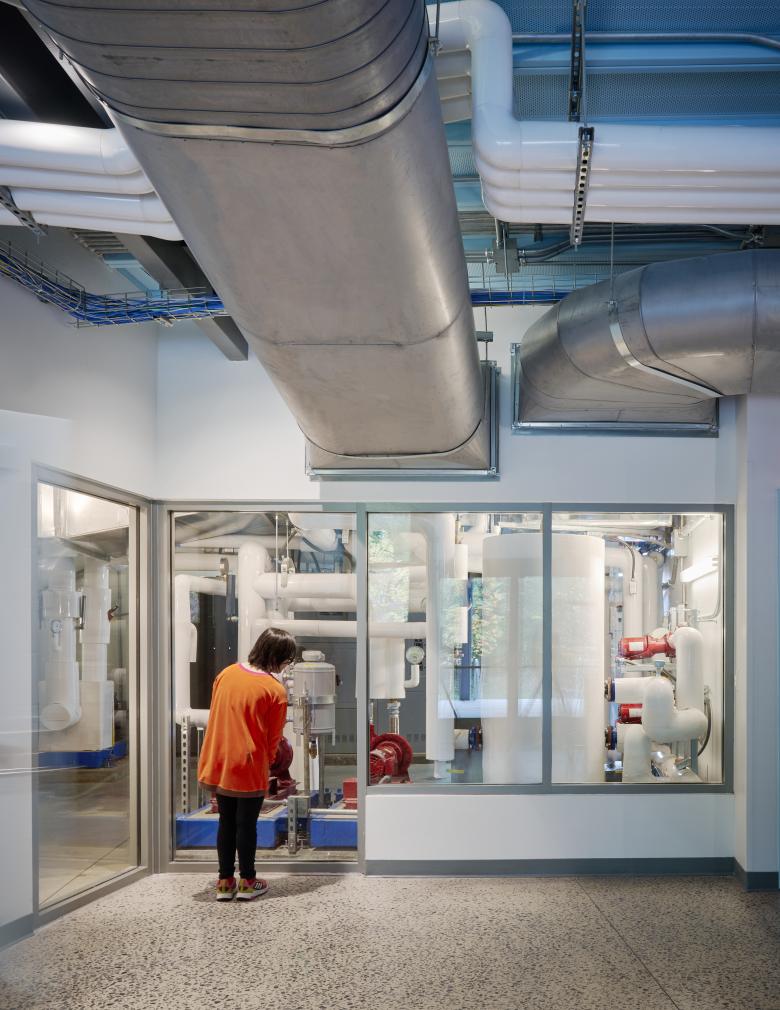
In addition to targeting LEED Gold certification, the building doubles as a teaching tool that highlights sustainable building practices. Mechanical and environmental systems are exposed so educators can share the building’s sustainable features with students and visitors: toilets flushed with rainwater, a geothermal system that takes energy from the ground to heat and cool the building, light-diffusing windows and skylights that provide daylighting and natural ventilation. Large windows in the mechanical room further display the building’s inner workings. Comfort and well-being were also primary goals: warm floors create cozy learning spaces, and even daylighting and sound-absorbent ceilings offer a calming environment. In the landscape, native planting in parking lot bioswales cleans rainwater runoff and keeps it from inundating the city sewer.
This project was awarded the New York City Public Design Commission Award for Excellence in Design, the Queens Chamber of Commerce Sustainable Building Award, and a SARA National Award of Merit.
- Architectes
- Leroy Street Studio
- Année
- 2023
- Client
- New York City Department of Parks & Recreation, Alley Pond Environmental Center
- Structural Engineer
- TYLin / Silman
- MEP Engineer
- Kohler Ronan
- Civil Engineer
- Sherwood Design Engineers
- Geotech Engineer / Wetlands
- Langan Engineering
- Environmental Engineer
- Atelier Ten
- Landscape Architects
- DLANDstudio
- Lighting
- Horton Lees Brogden
- Cerami & Associates
- AV, IT, Security, Acoustics