Momo Era Studio – Xuhui Store
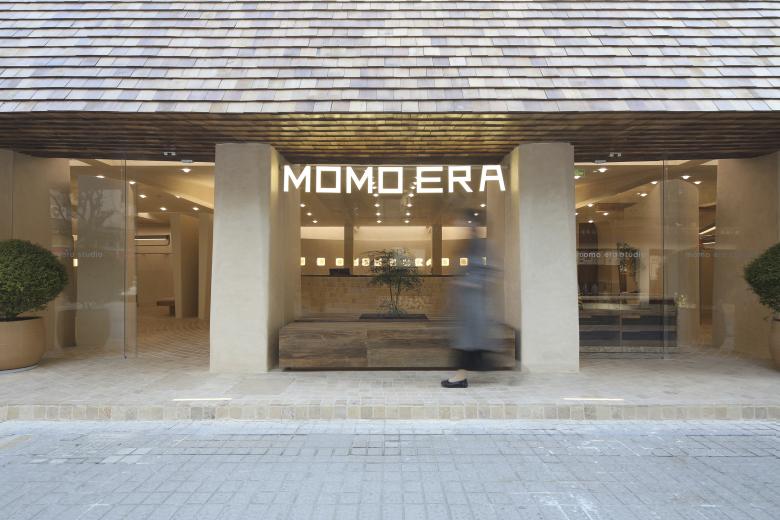
In the bustling city, MOMO ERA is dedicated to offering urban women a variety of clothing lines. When selecting a location, the brand chose to avoid the busy streets and instead entered a creative park, maintaining a perfect distance from the noise of the street. Within this park, the store has its own understated and exclusive tone. This choice presents a challenge to traditional retail design but also opens up a new direction for the design. The owner entrusted Atelier d’More to renovate and design the space, hoping to create a shopping environment that is intimate, natural, pure, and imbued with a sense of nostalgia—a place where every customer can experience the ease and comfort of a home. Ultimately, we returned to the timeless theme of “Body – Space.”
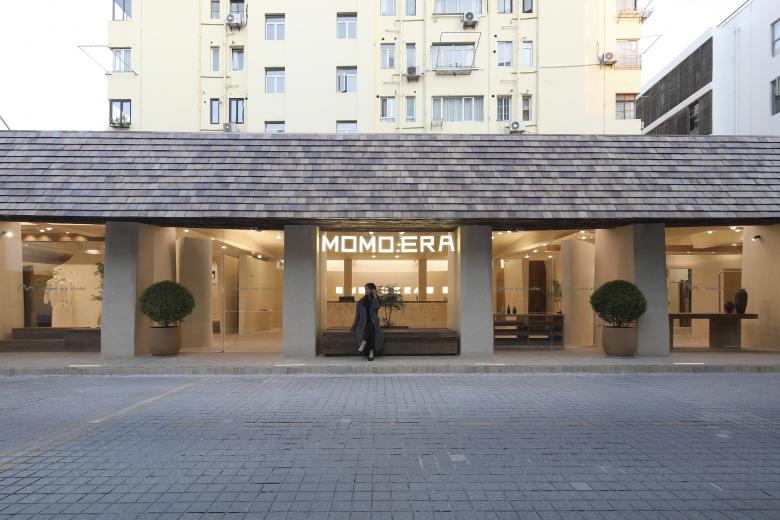
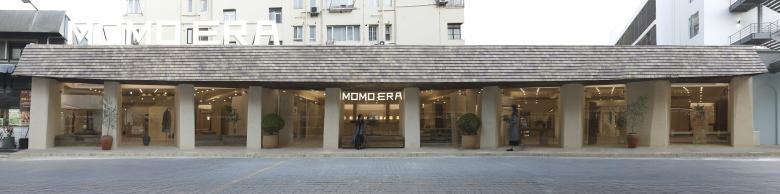
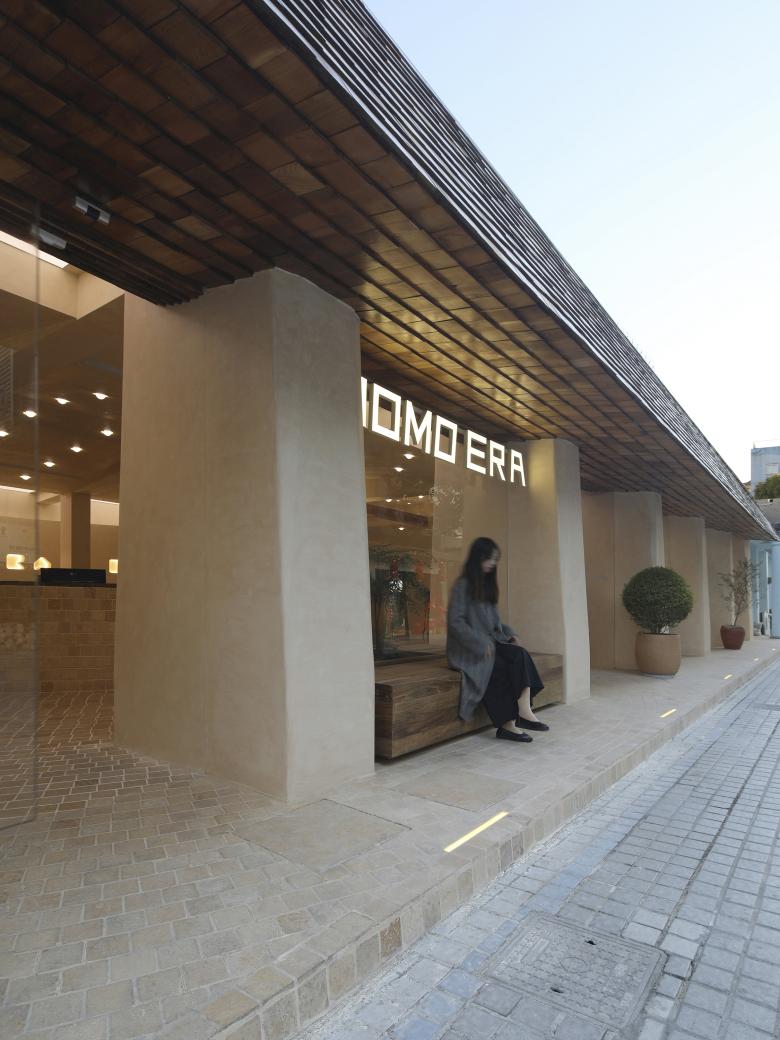
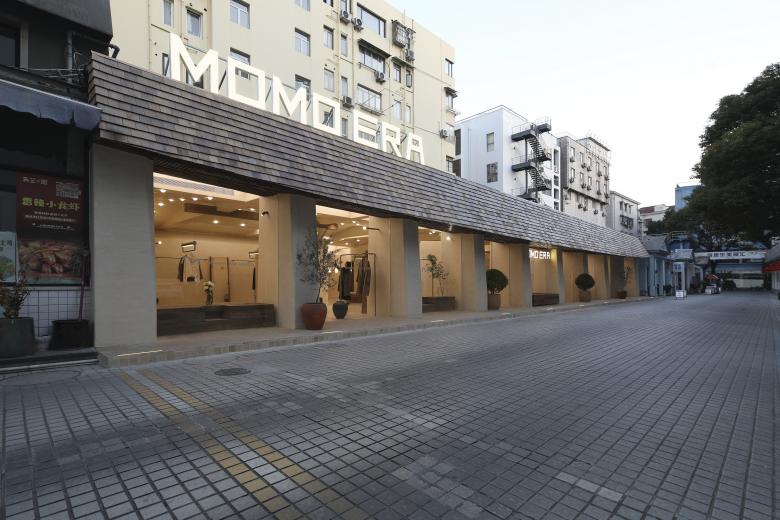
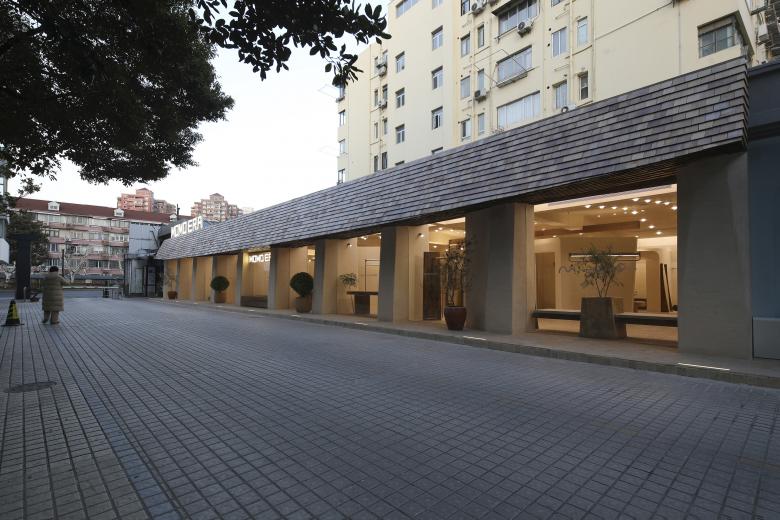
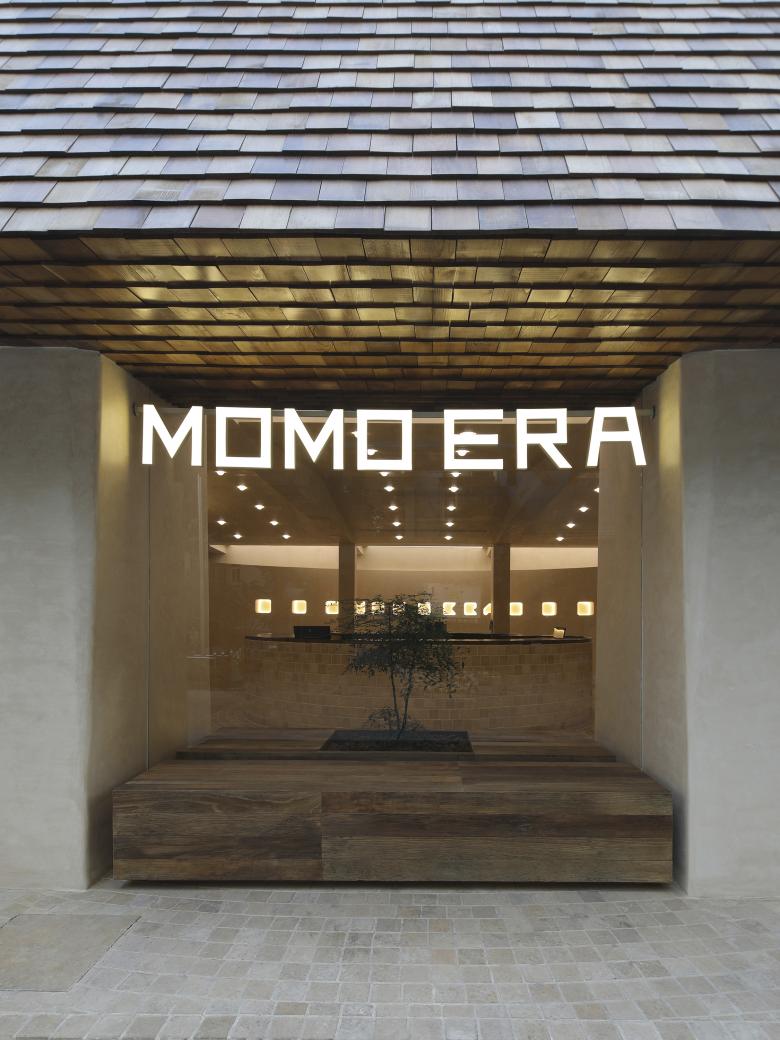
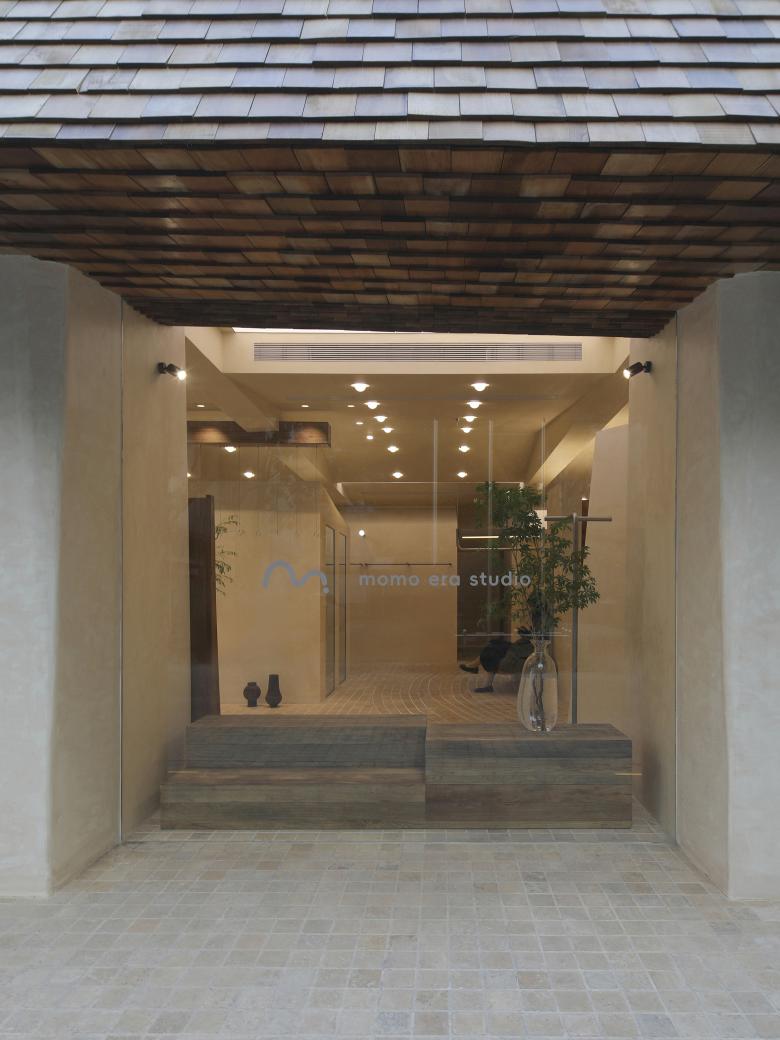
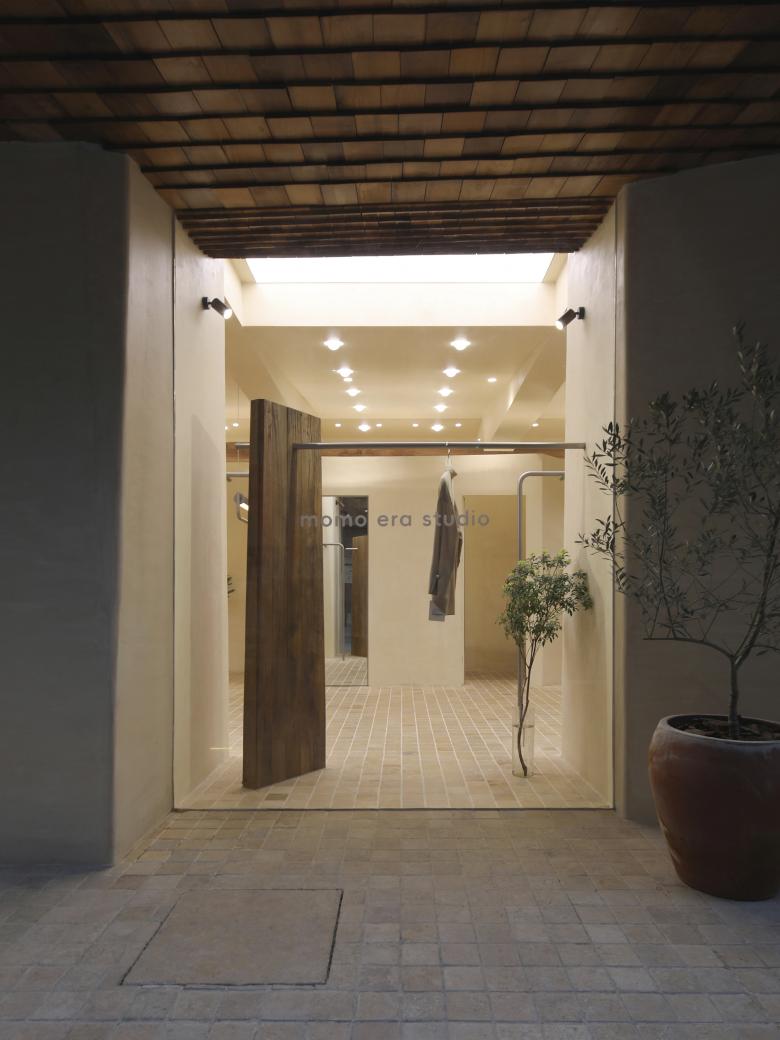
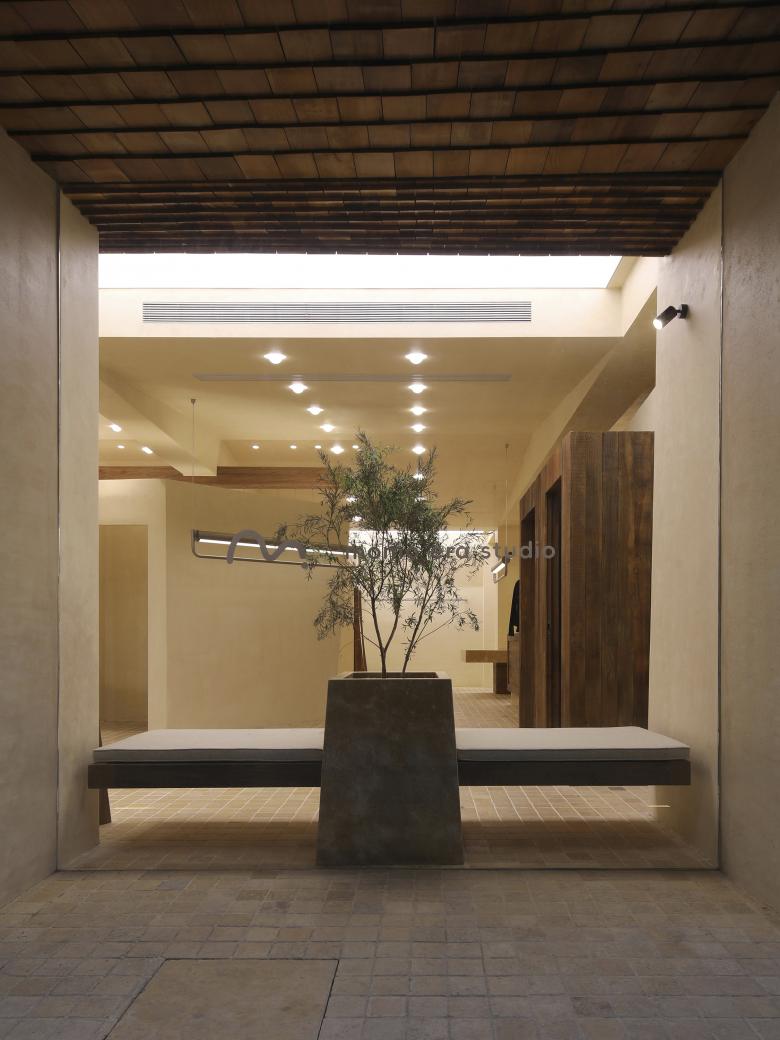
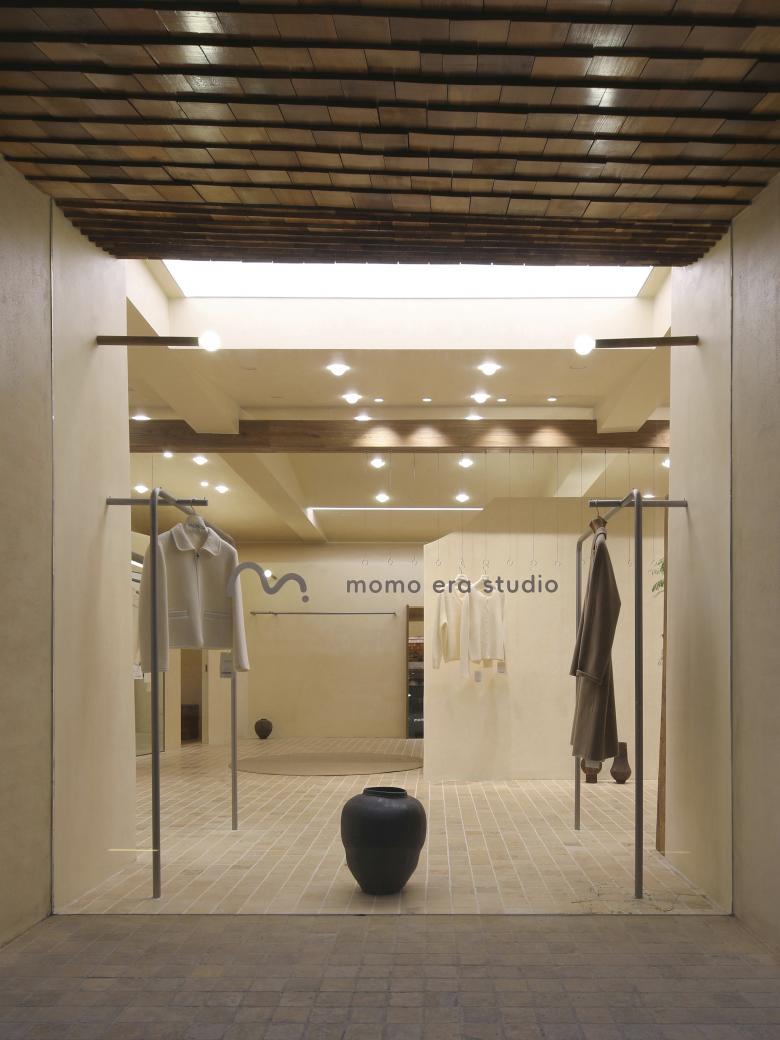
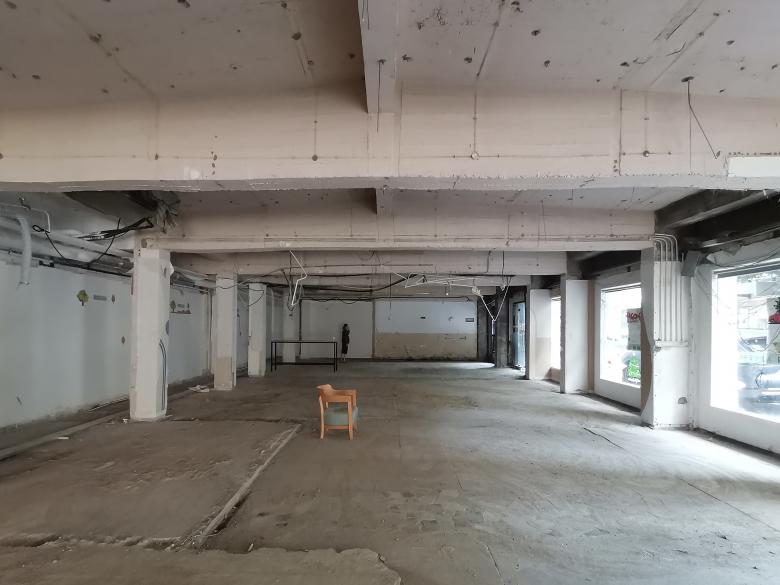
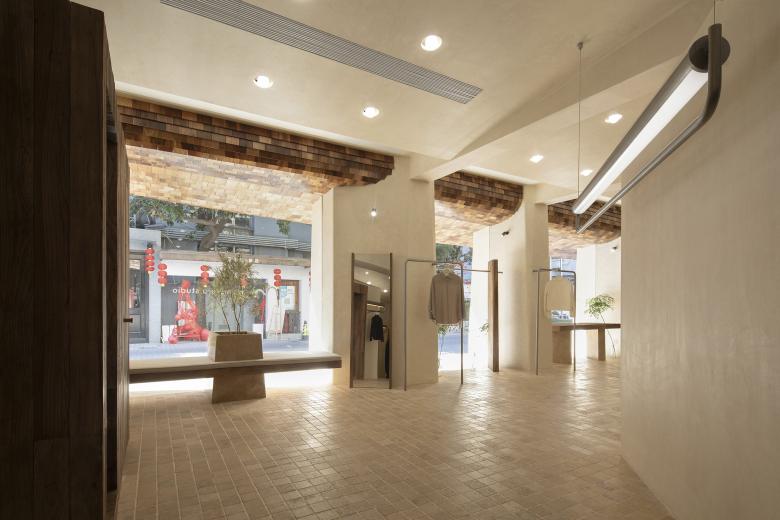
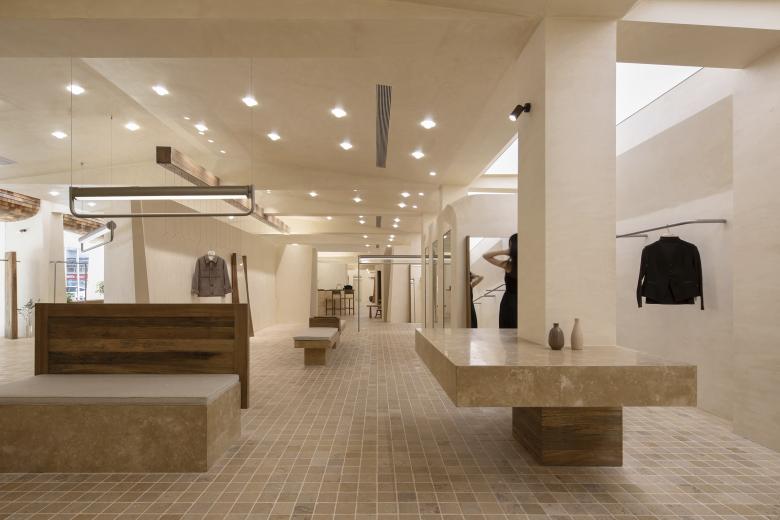
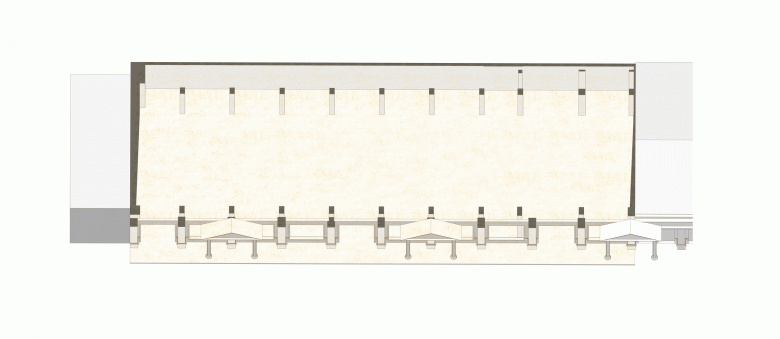
Arrival, exploration, selection, and seating: for the body to choose clothing that covers it in the present moment, and for the soul to find a moment of refuge—this is the design aspiration we aim to embody in the space. The site is a standalone building along the main road within the park, with an original façade that, during the park’s early renovation, deliberately concealed the heavy, homogeneous concrete beam-column system with European-style decoration. By removing these added decorations, the authentic structure of the building was revealed: a series of columns every three meters connecting nine window openings and supporting a 10m x 30m gently curved gable roof. This immediately evoked the image of a large house within the space. To make the building resemble a house even from the outside, we gave the façade a new roof, which created a corridor in front of the building. As people approach from either side, the roof gently lifts, and as they near the entrance, it flattens out, subtly contrasting with typical store entrances that expand outward. This approach seems to intentionally conceal the warm interactions inside and, at the same time, draws people closer, making them feel at ease. Attached to the roof, red cedar shingles climb along the curved roof, eventually reaching the high point of the space. Artificial skylights above cast light downwards, showering the varying angles of the shingles. The light and shadows play between the columns, creating a dynamic between presence and absence. Thus, the house finally assumes a clear and inviting form.
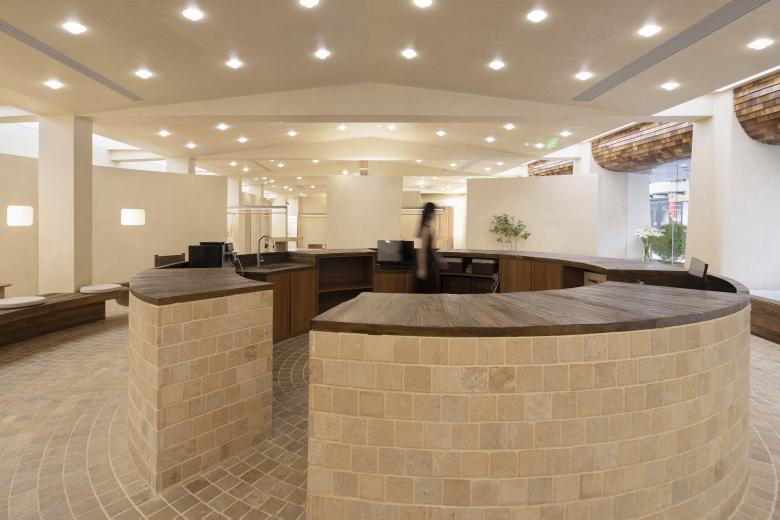
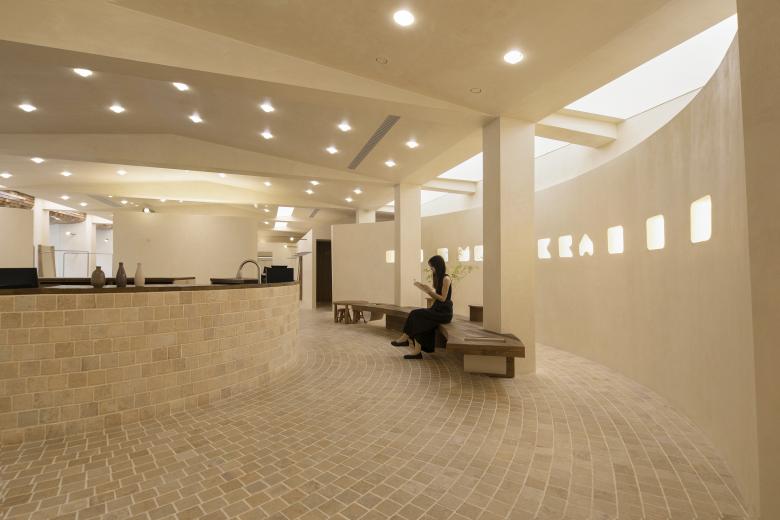
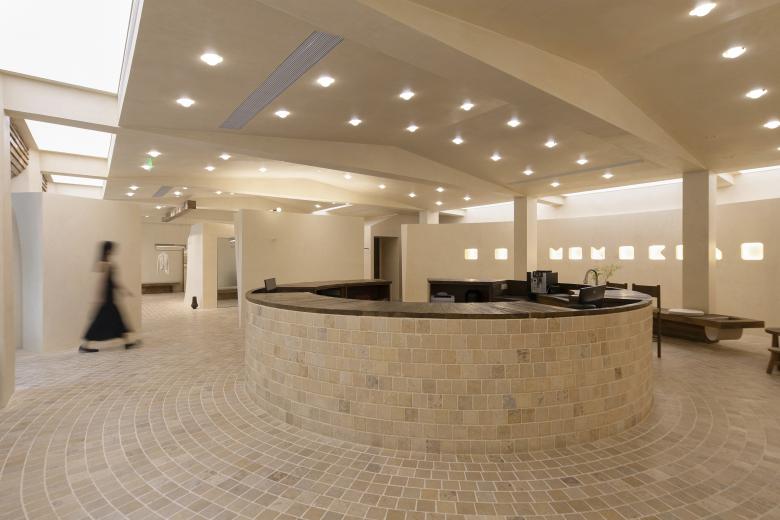
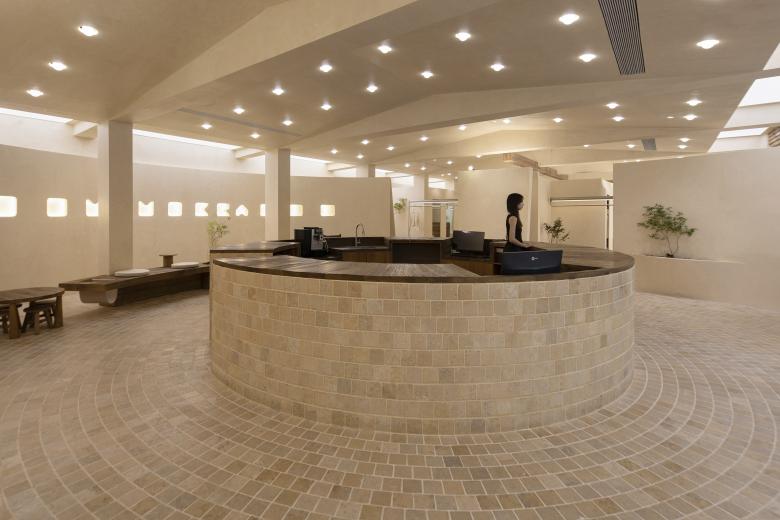
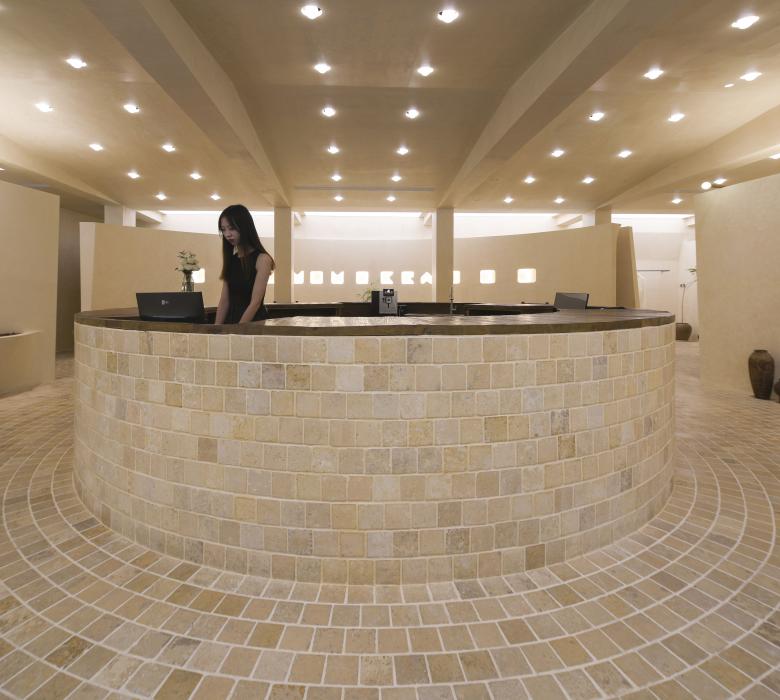
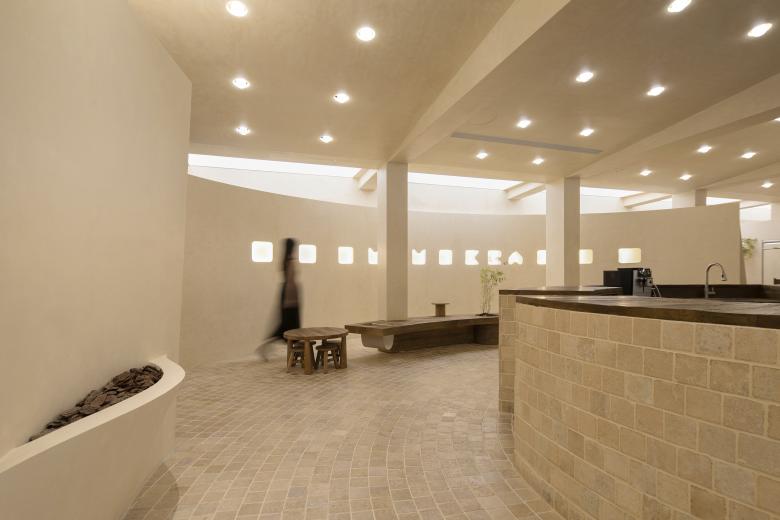
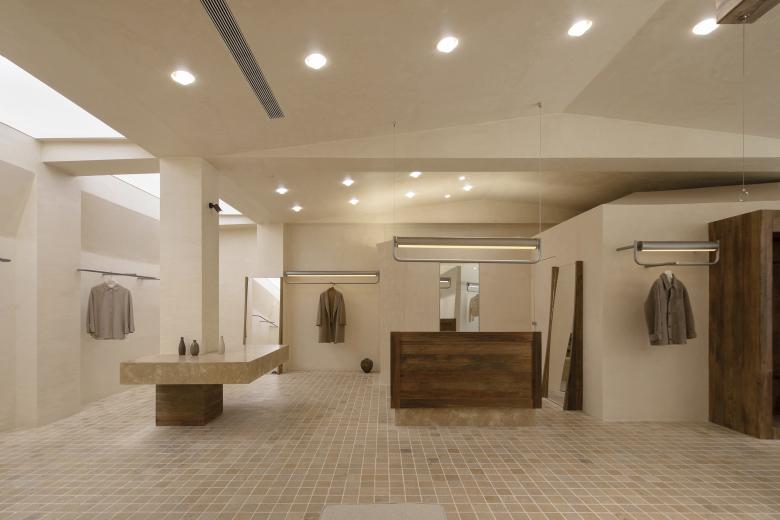
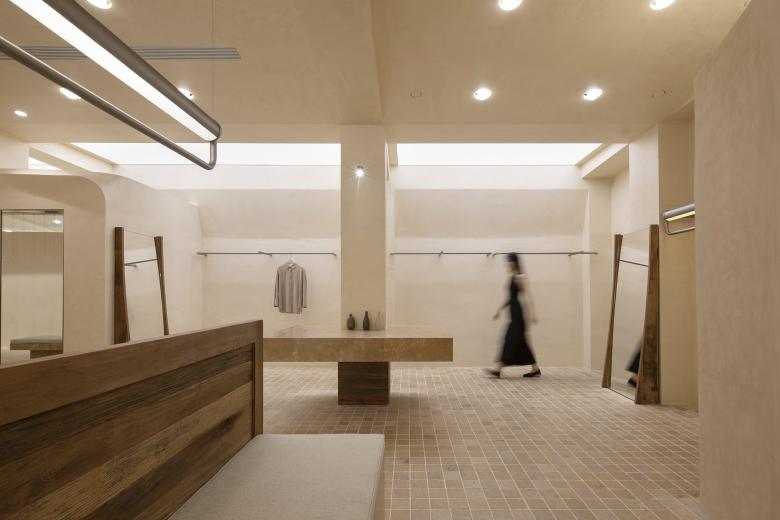
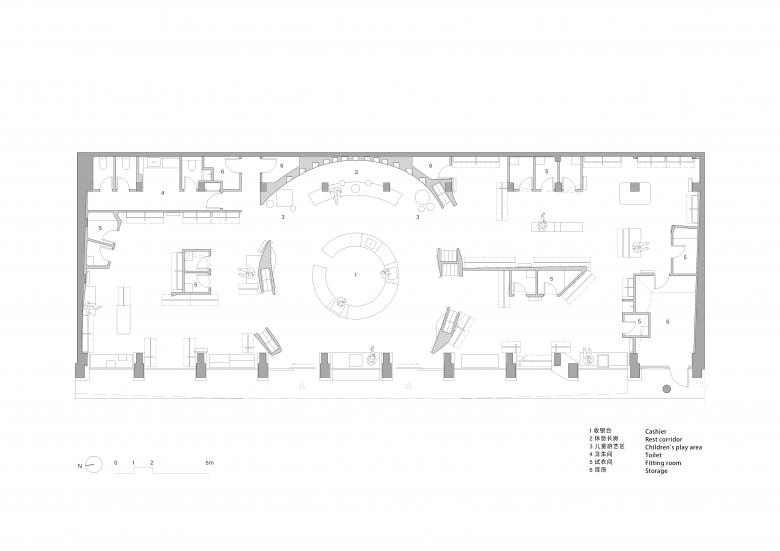
As the space unfolds inward, it reveals the central “inner courtyard.” The round central island cashier serves as both the starting point for welcoming guests and the end point for shopping. The entrance walls of the display areas on both sides are sculpted like clay, softly surrounding the central island. The entire curved background surface gradually separates from the original walls and gently narrows toward the central island area. Geometric niches, simulating the brand’s typography, are quietly embedded into the walls—unobtrusive, yet eye-catching. Whether for shopping or resting, the “inner courtyard” always awaits guests with a welcoming attitude.
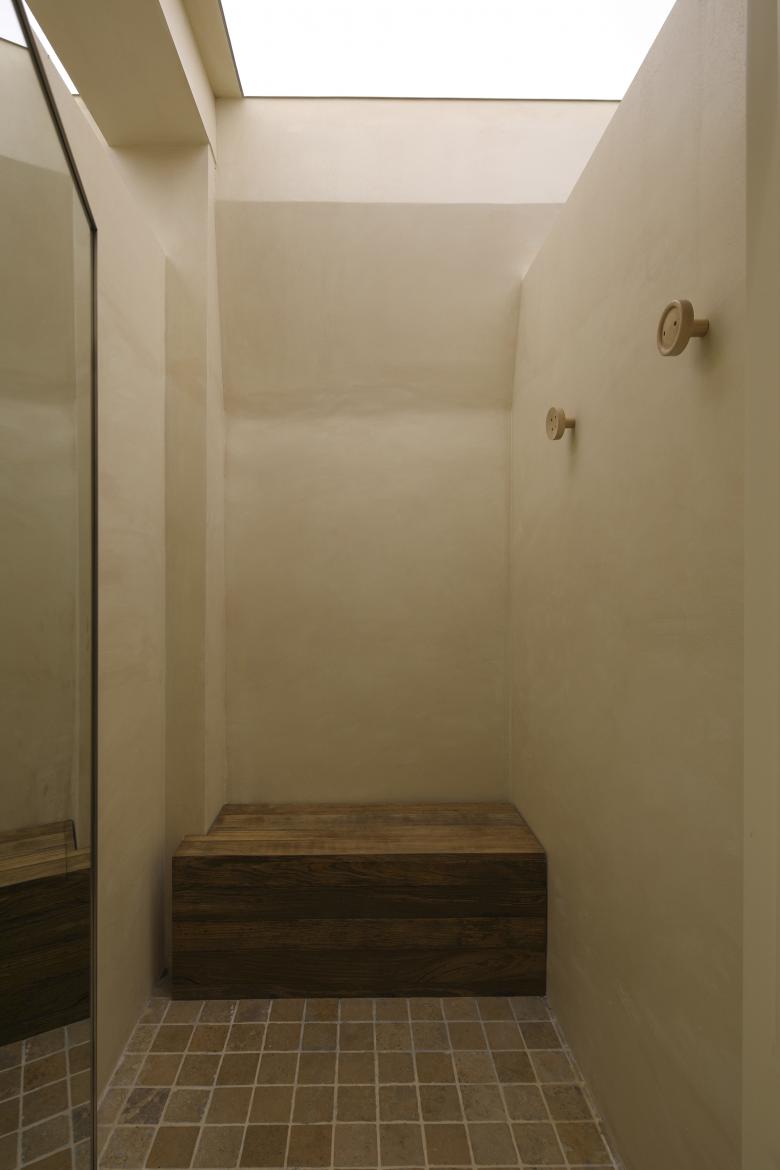
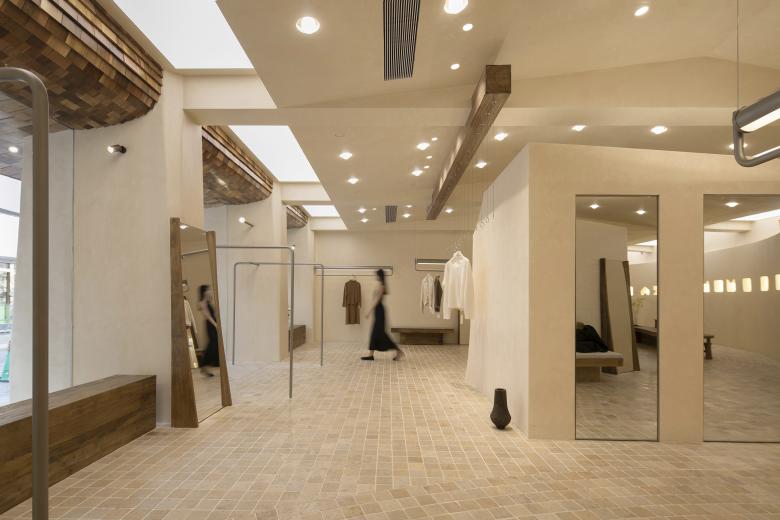
Around the “inner courtyard,” three distinct display areas are connected through a flowing circulation. Departing from the typical clustered fitting room layout, each area is given its own unique volume and form. Elongated tail ends, gathered upper openings, raised corner lines, walls stripped from columns, and recessed openings at the corners create an organic flow, transforming what was originally a rigid layout into a series of harmonious, soft “small houses” scattered along the space. In the corners, the shapes of the warehouse and restroom ceilings are intentionally lowered into sloped planes, enhancing the image of small houses.
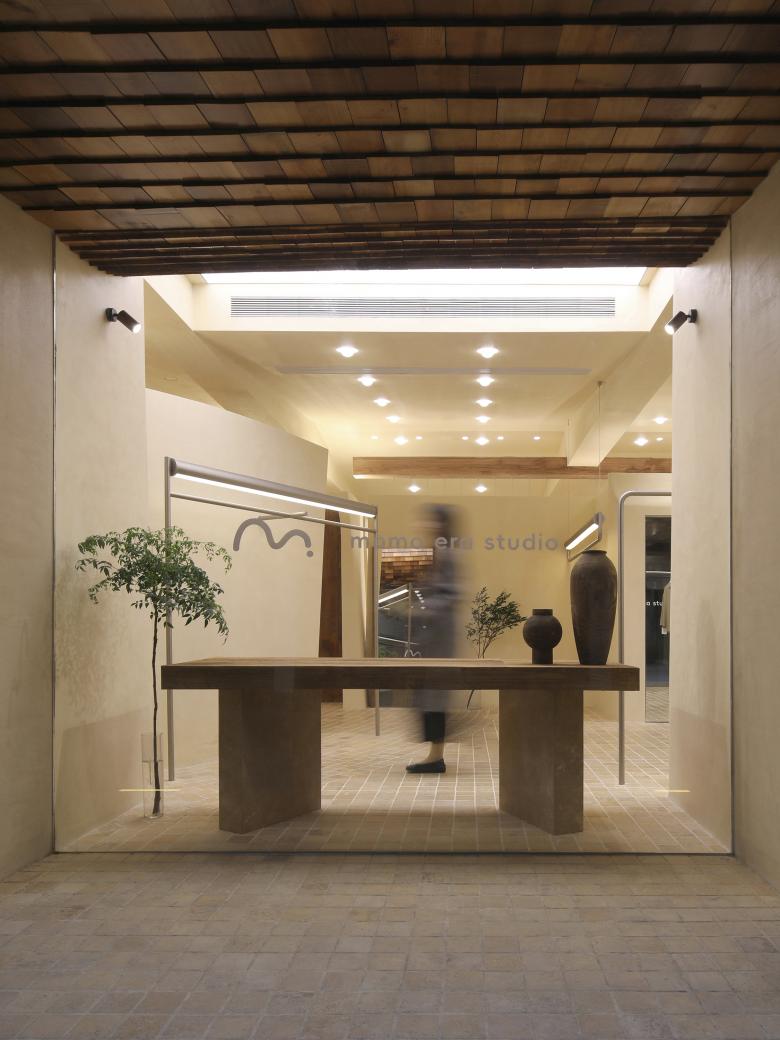
In terms of material selection, we sought to replace large-scale materials with smaller, older ones to reflect the family-oriented essence of the house. The floor is not laid with large tiles, but with 10×10 cm small blocks of lime stone, arranged radially from the center of the “inner courtyard.” These stones extend upwards along the walls at the edge of the circular cashier desk. The furniture, which directly interacts with people, is made from old elm wood slats salvaged from old door panels. These slats have been reassembled, cut, and painted to give them new functional meaning. The overall paint finish of the space is applied in a rubbing technique, leaving a mottled trace of age on the surfaces. Rather than using typical commercial lighting, we handcrafted spherical lights, partially embedded into the ceiling, hiding the fixtures and creating a floating light source that adds a fresh touch to the space.
We tried to harmonize the objective factors and needs of the project, ensuring they found an appropriate way to coexist. The thickened corridor columns were a result of the difference in dimensions between the original structure’s inner and outer columns. The newly shaped, tapered columns, after being polished, have a warm, antique texture. The “wooden beams” suspended from the ceiling were designed to accommodate the installation of garment hangers. They interlock with modern concrete beams using traditional methods, thus recalling a fragment of the memory of past wooden beams. The sloped ceiling, close to the structural beams, was created to avoid the air conditioning pipes above, resulting in a continuous, unbroken gabled roof. Therefore, from a construction perspective, we did not physically build an entire house, but once a customer rests and looks around, following the contours of the space, perhaps in a fleeting moment, this “non-built” house echoes another house once visited—a place of shelter under a low, sloped roof, where we once paused and instinctively pulled down the collar of our clothes, reconnecting with familiar memories.

- Year
- 2024
- Project Status
- Built