Whatever Coffee (Suzhou Hubin New World Store)
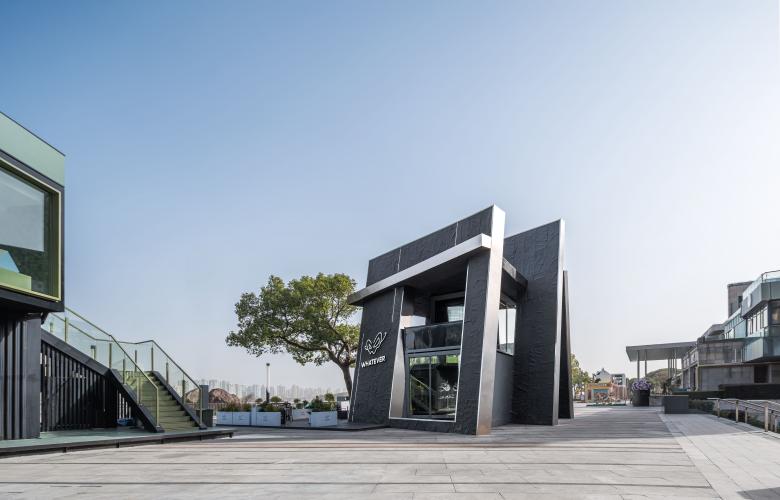
More than a café, a stage sprouting from urban cracks.
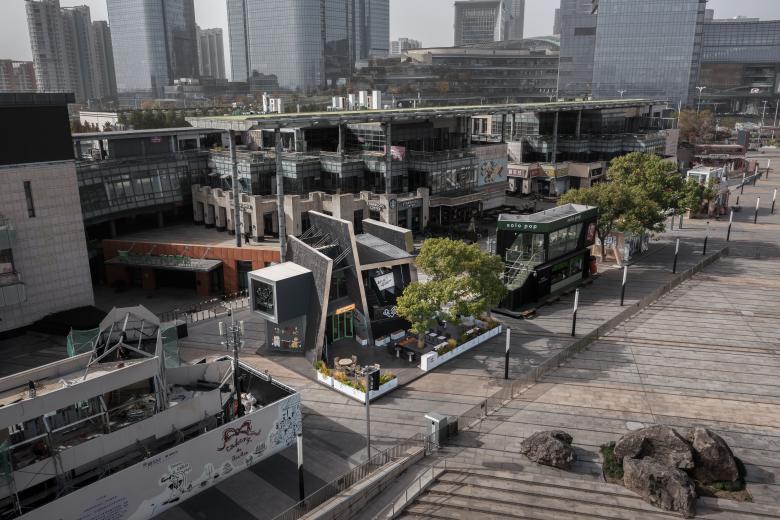
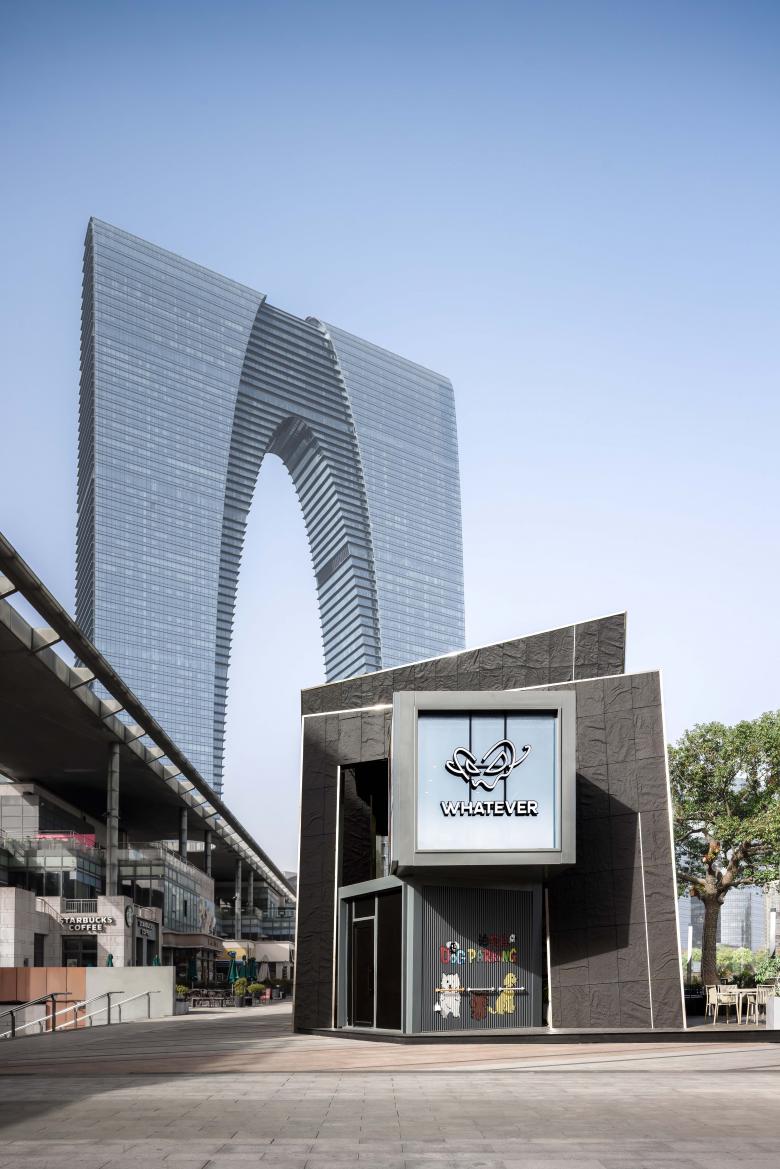
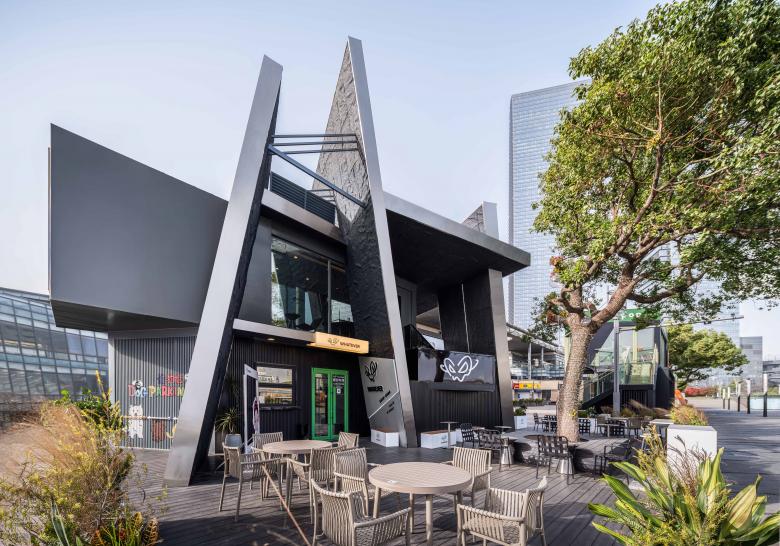
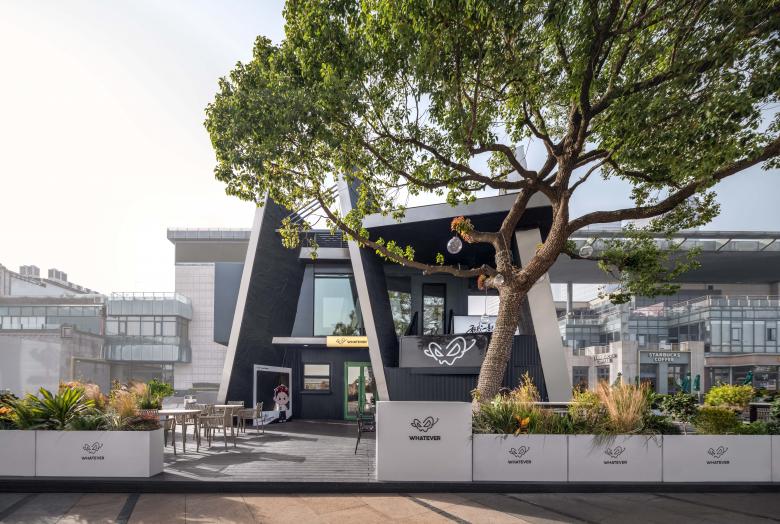
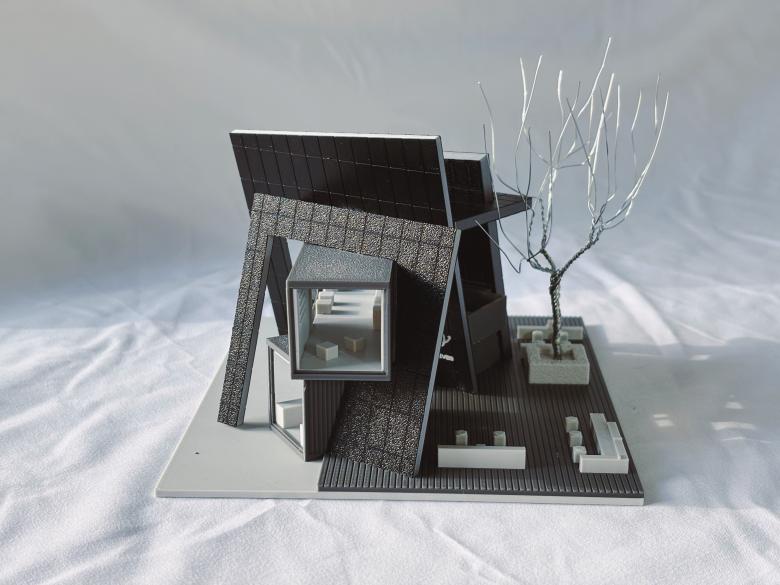
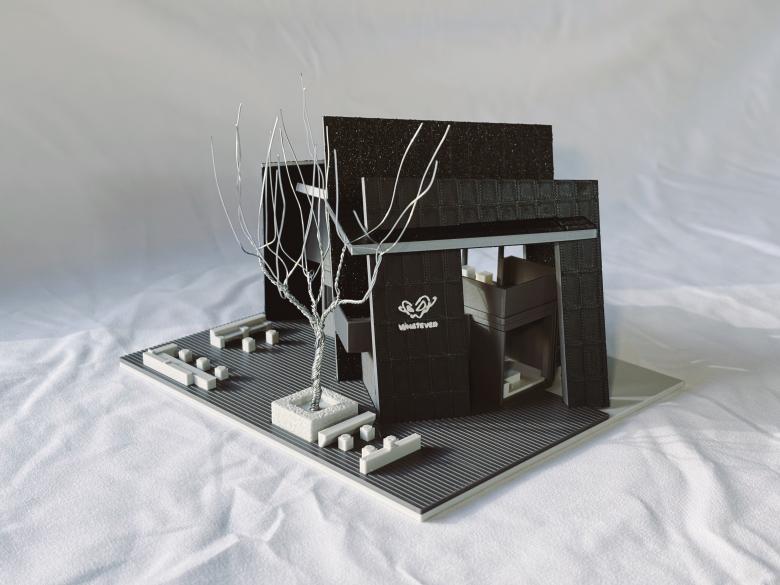
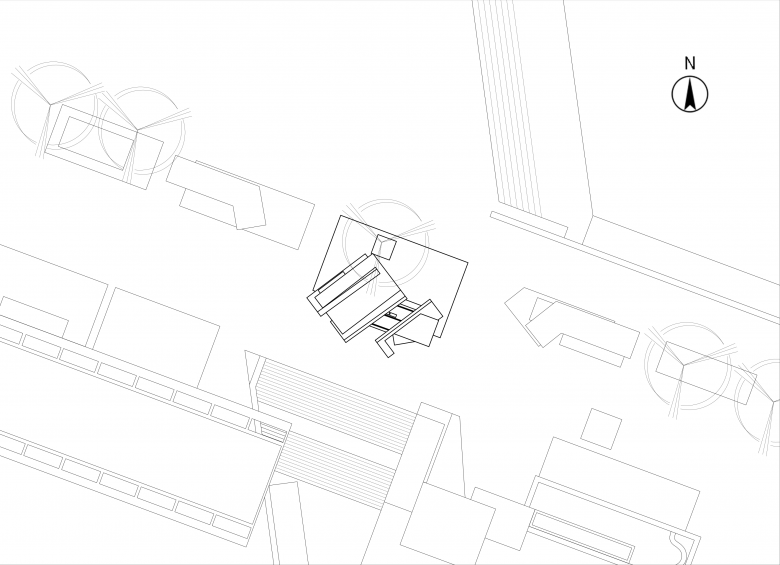
There are always unexpected breathing spaces tucked away in the crevices of a city. In this corner of Lakeside Paradise in Suzhou, the design team adopted the concept of urban cracks and transformed two stacked shipping containers into a dynamic spatial form. This deconstructive architectural design echoes the core ethos of the WHATEVER brand advocated by Daniel Wu—unrestrained, spontaneous yet underpinned by a resilient order.
The core of the design lies in breaking the rigid boundaries of conventional architecture. Through the fragmentation and recombination of space, it juxtaposes the hustle and bustle of the city with the tranquility of a café within a single spatial frame. By doing so, it redefines the interactive relationship between people, architecture and the urban environment, creating a consumption and social venue that resonates with the younger generation’s pursuit of an undefined lifestyle.
01 A crack along the shore
A subtle slit gently carved into the lakeshore—here marks its starting point.
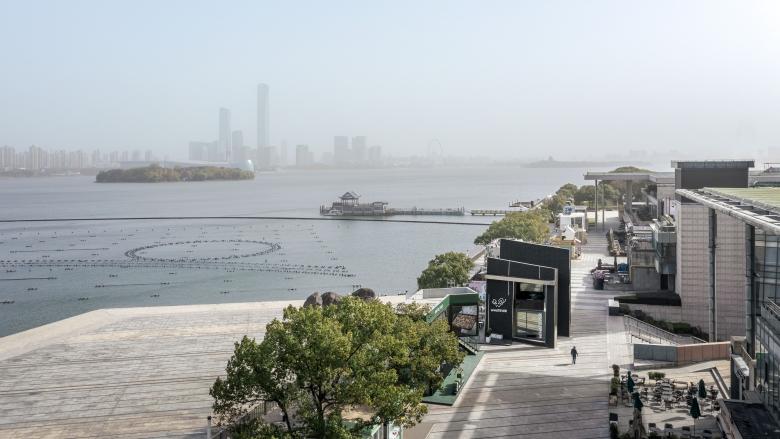
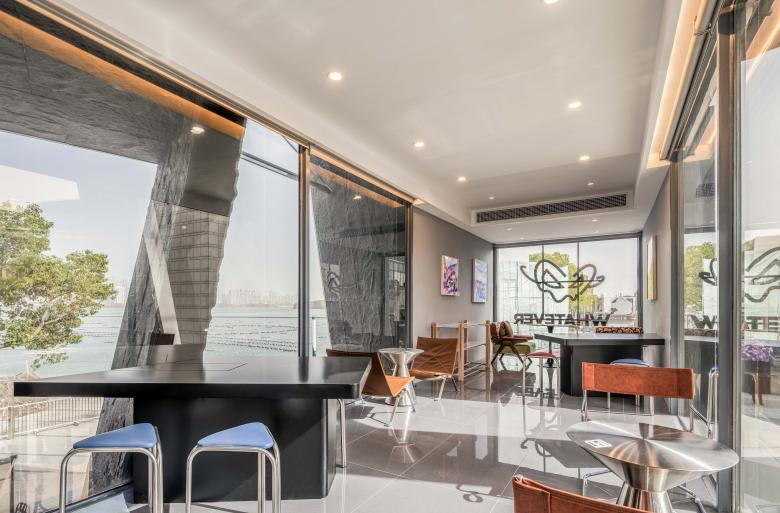
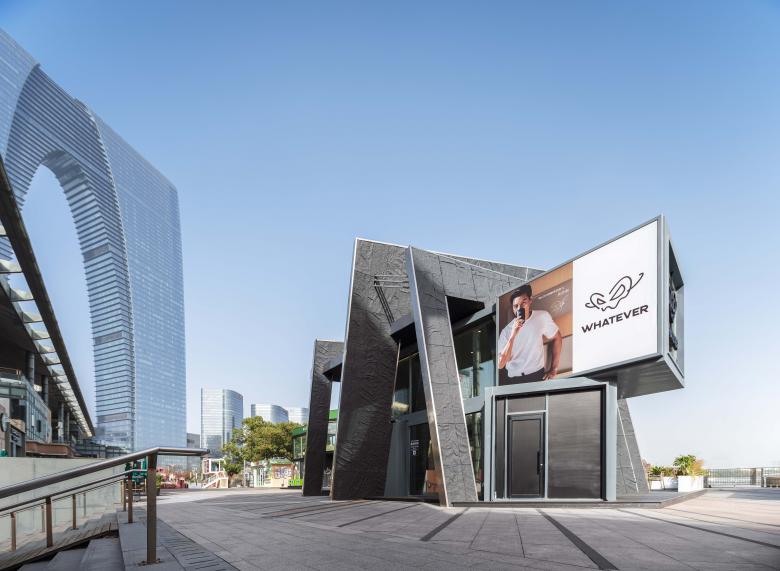
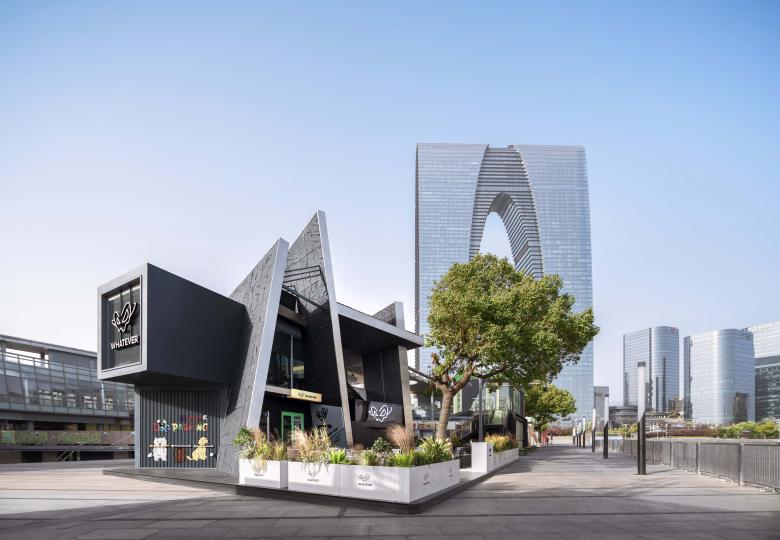
The lakeside facade adopts a clean mass-cutting approach, with the building’s main structure naturally echoing the shoreline. Contrasting the rigid architectural volume against the serene water surface, the design ensures the building’s visual distinctiveness by the lakeside. Meanwhile, its transparent interfaces enable seamless interplay between indoor and outdoor landscapes, organically integrating the café space with the lake views.
02 A fracture at the corner
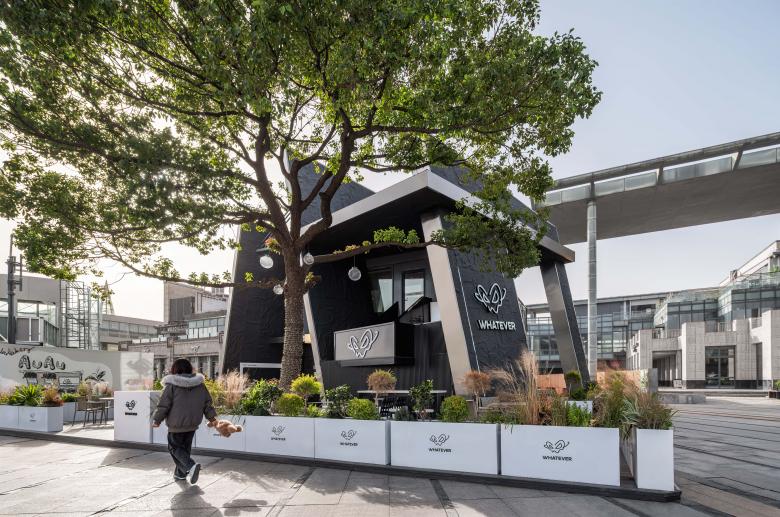
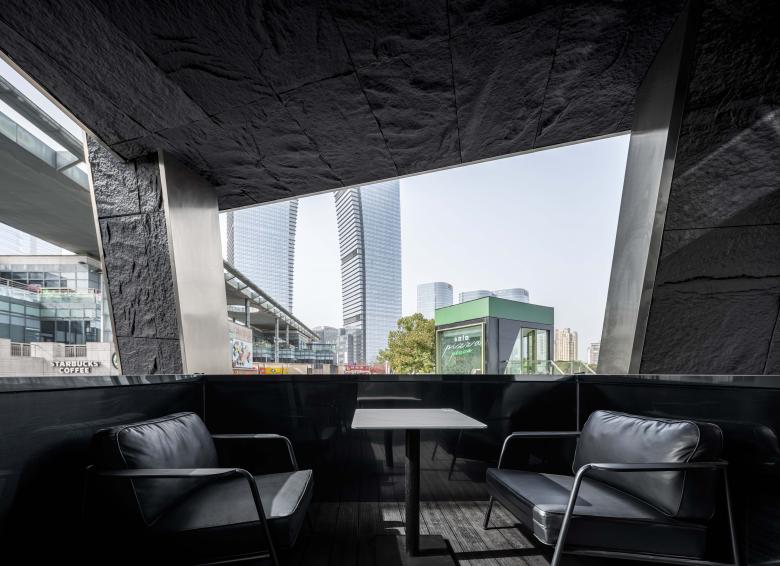
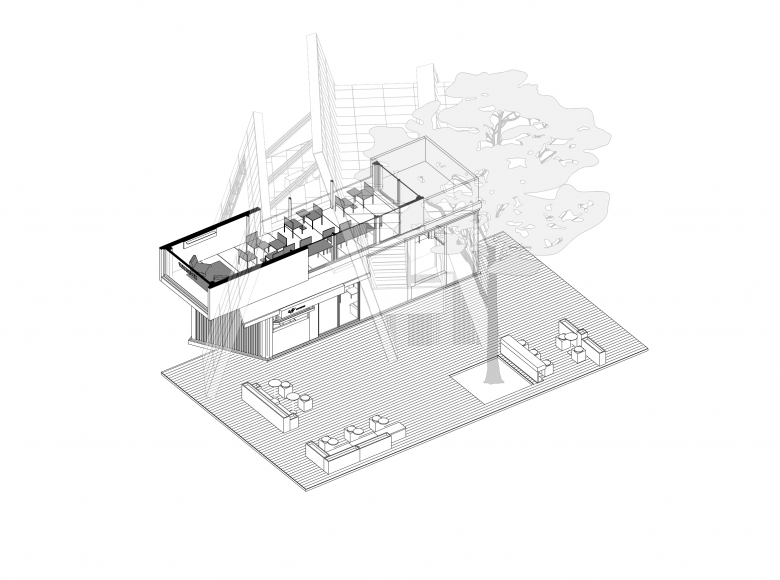
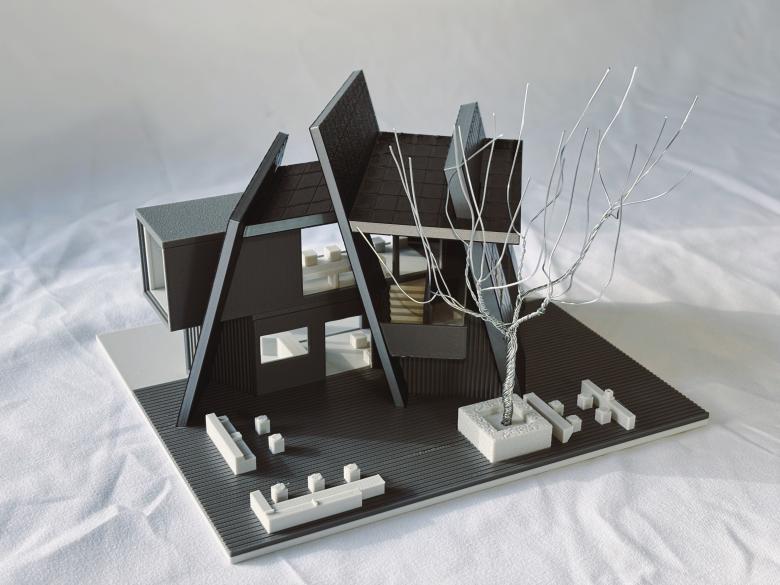
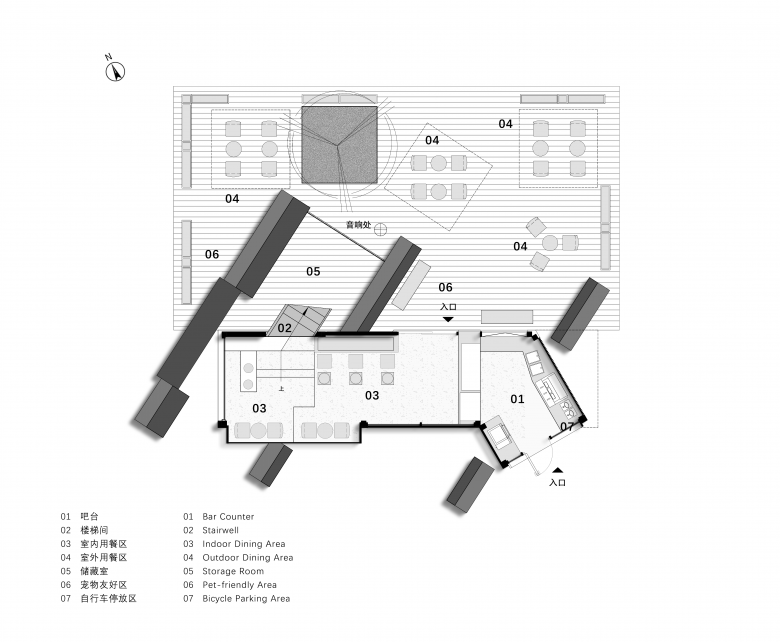
The outdoor seating area features wooden paving as the primary material, creating a seamless transition with the street through a neat paving layout. The design blurs the rigid boundary between the building and the city, softens street hustle with the warm texture of wood, and builds a functional yet relaxed transitional space that caters to users’ needs for temporary stays and social gatherings.
03 The threshold of the fissure
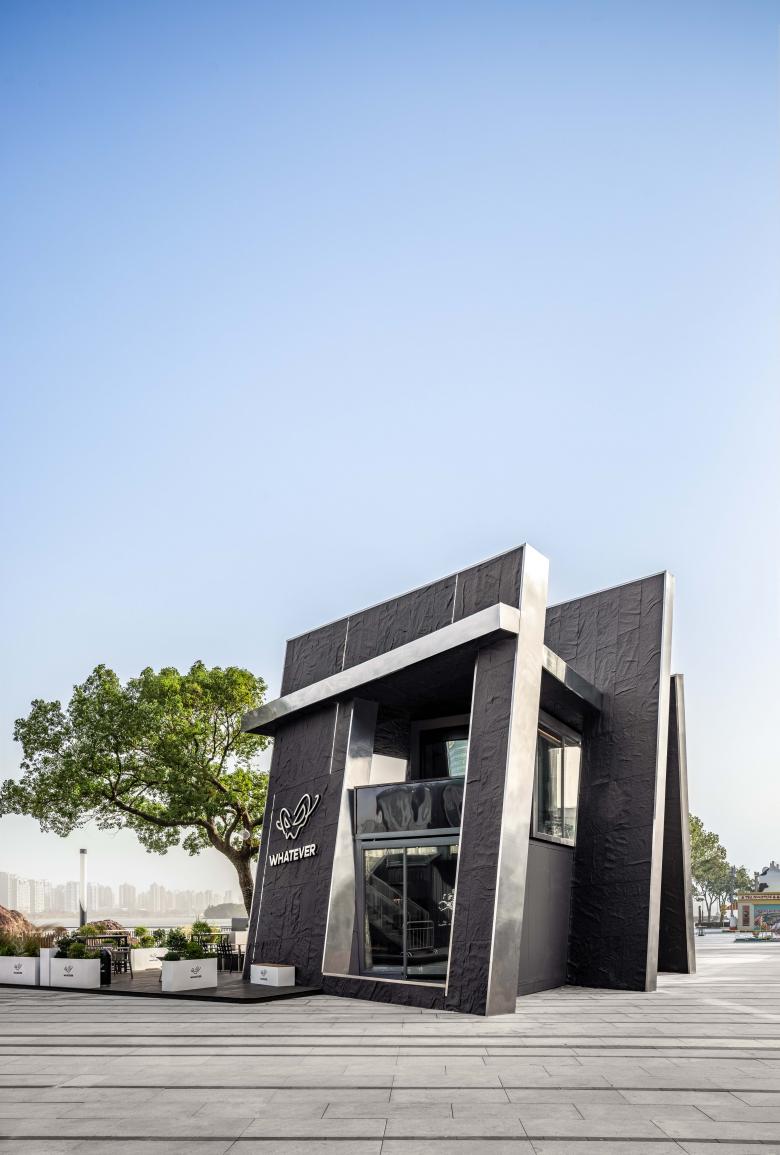
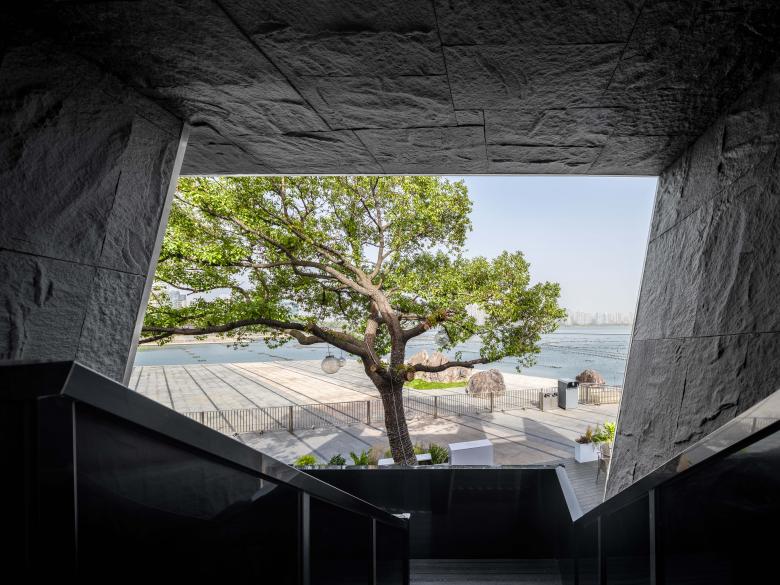
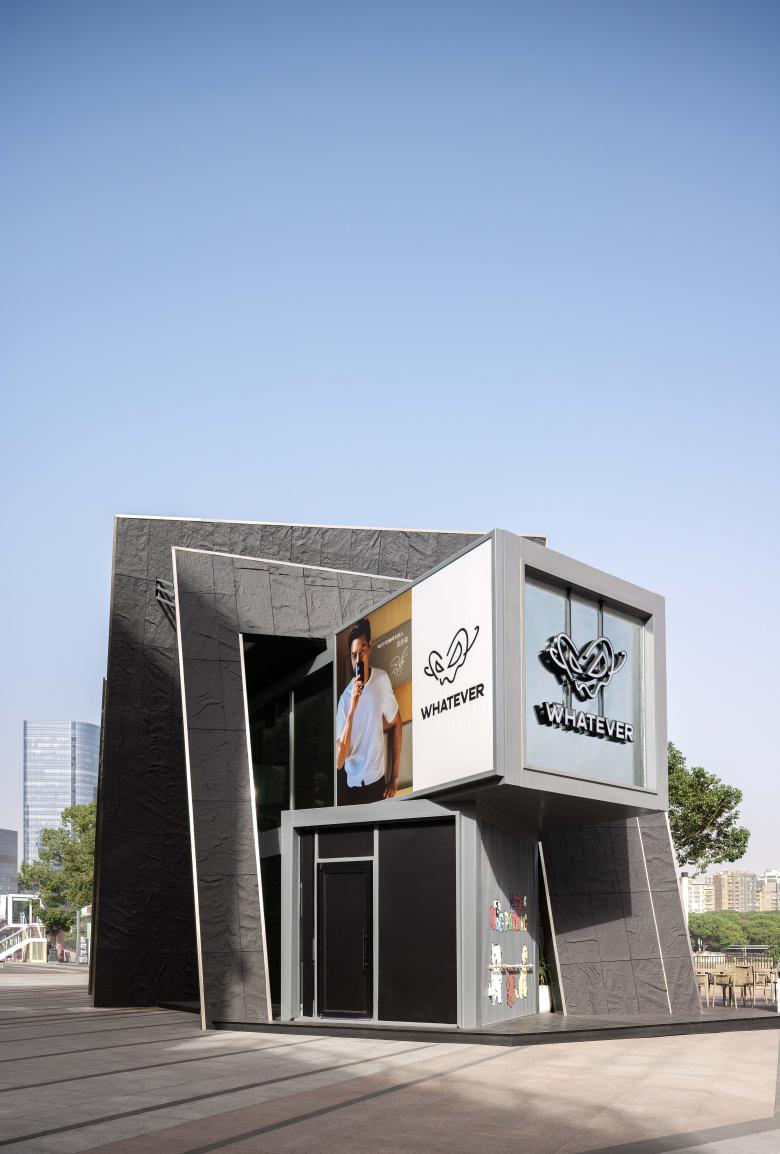
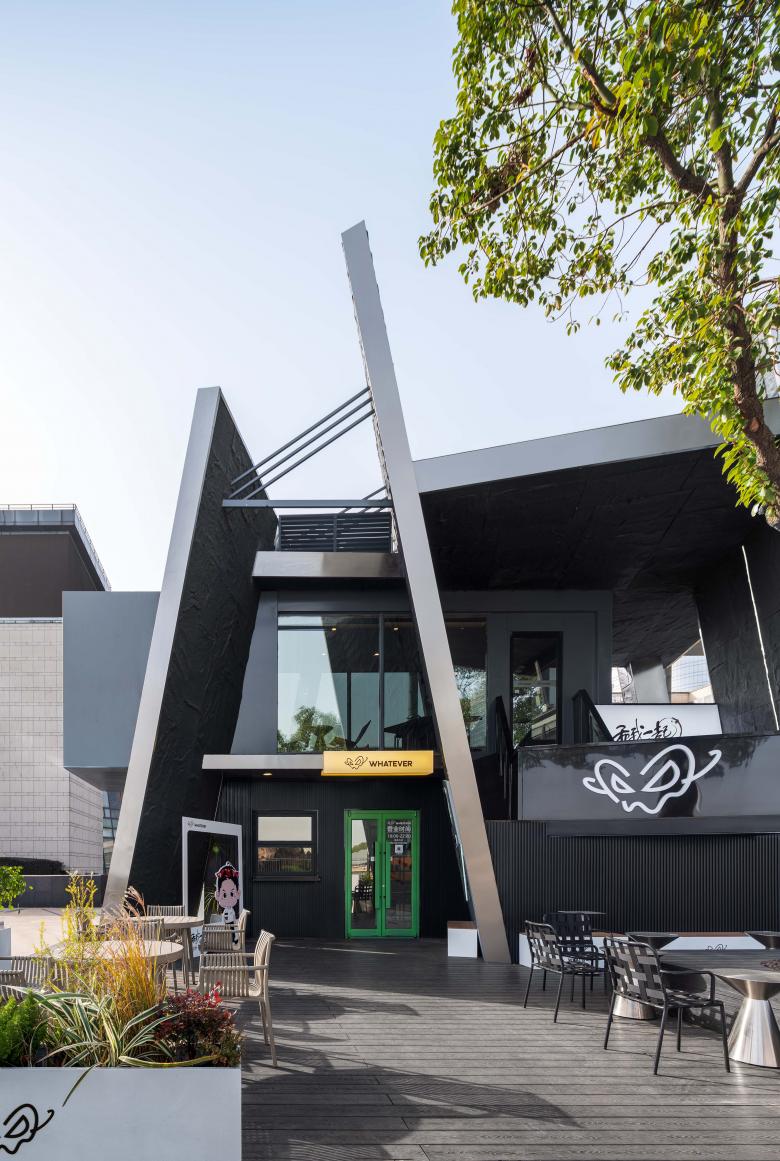
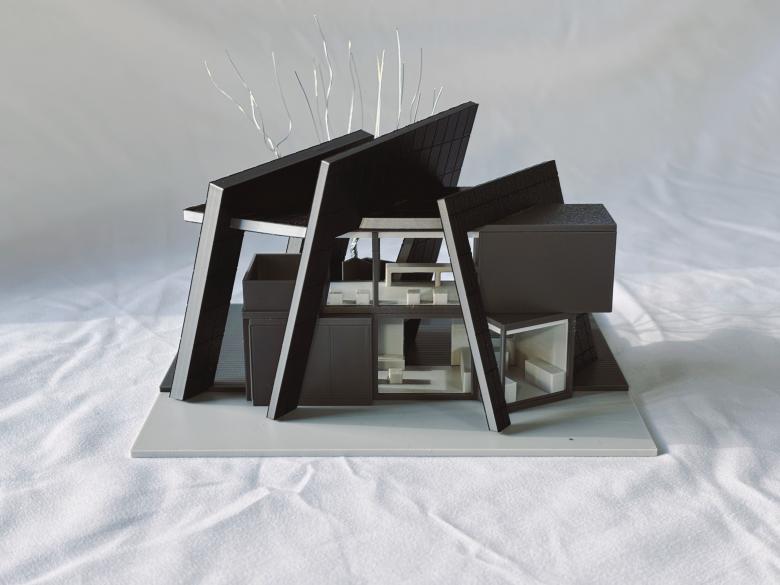
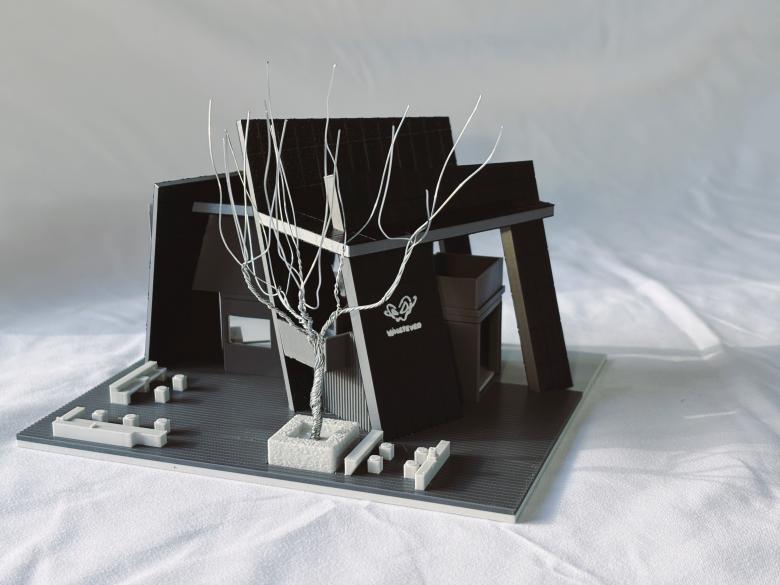
The entrance adopts a double-panel sandwich gap structure, with two angled panels forming a narrow passage. Its asymmetrical slant design not only boosts the entrance’s recognizability through a distinctive form but also fosters a sense of exploration via sightline guidance. This reinforces the spatial imagery of cracks and achieves the unity of function, visuals, and theme.
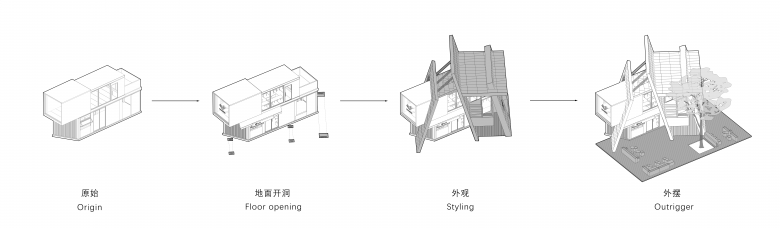
Based on the original frame of the shipping container, the main building transforms the dynamic tension of lakeshore fragmentation into its facade form through partial cutting and extension. The upward-opening window on the left not only enhances ventilation and daylighting at the entrance but also creates a distinctive architectural detail, endowing the static facade with dynamic tension that echoes the brand’s youthful, vibrant spirit.
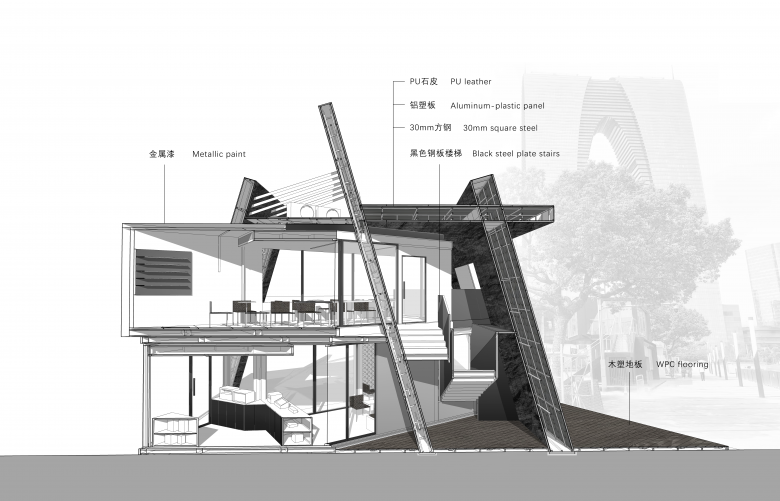
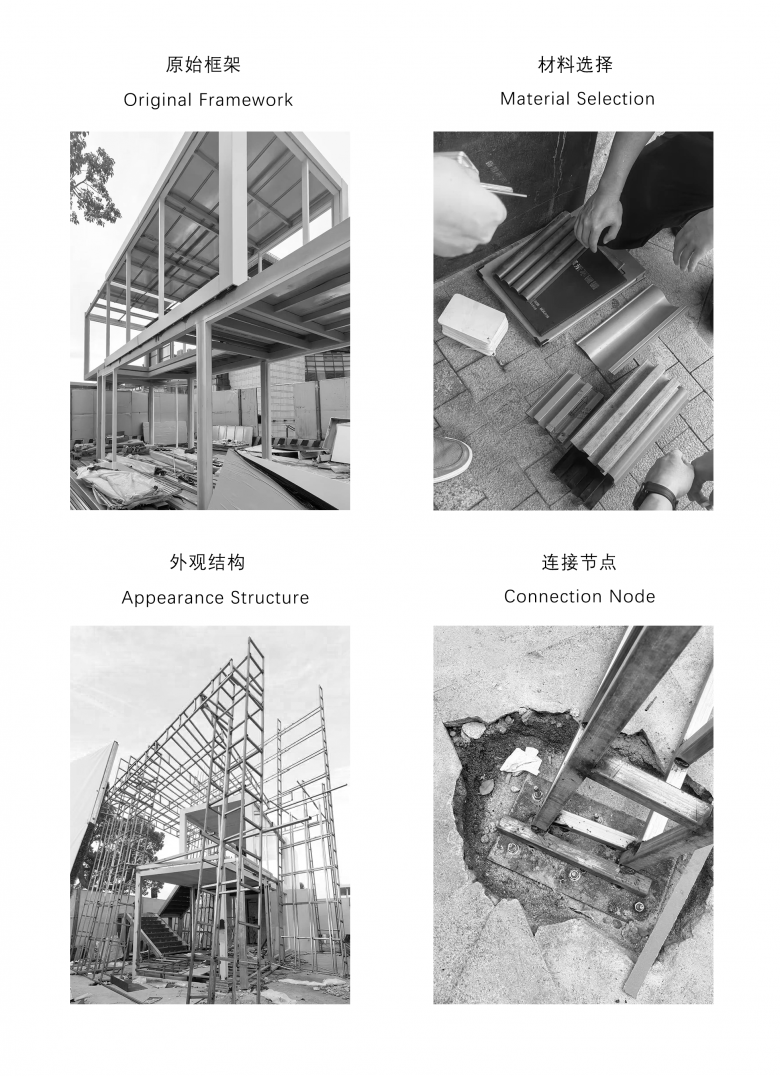
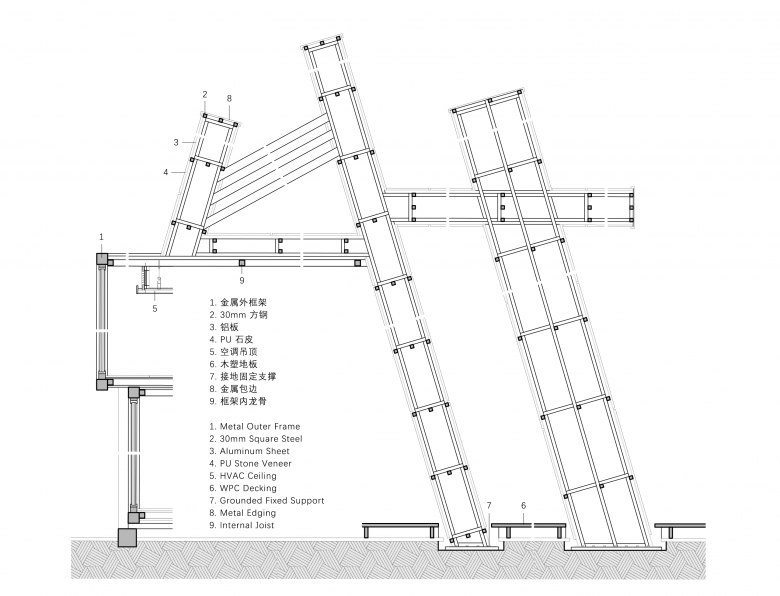
The three slanted wall panels serve as the core medium for expressing the design theme, constructed following the technical logic of frame-base-skin: first, a slanted frame is built with 30mm square steel to ensure structural stability; next, aluminum panels are applied as the base layer for PU stone veneers, providing a flat, firm surface for veneer installation while enhancing the overall rigidity of the panels; finally, 600*1200mm PU stone veneers are laid and finished with silver aluminum trim. The rough texture of the stone veneers interweaves with the sleek luster of the metal, which not only improves the building’s weather resistance and functionality but also conveys the brand’s core value of being free-spirited yet resilient through sophisticated craftsmanship details.
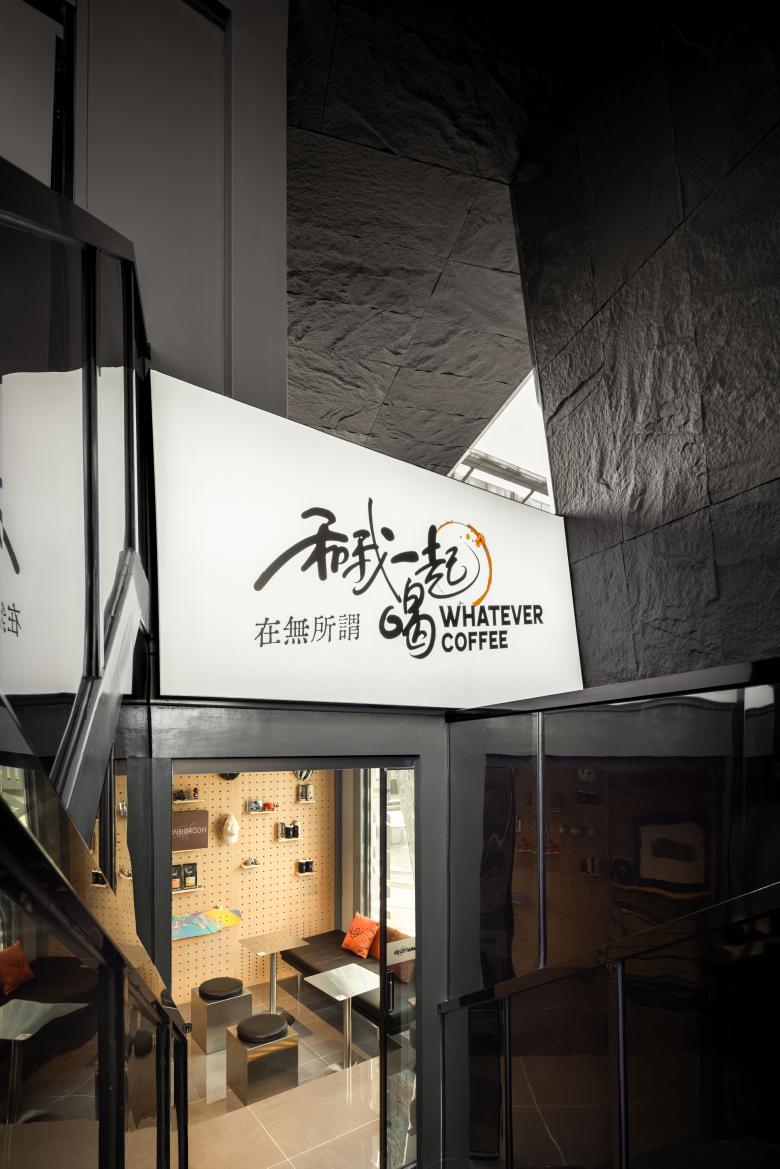
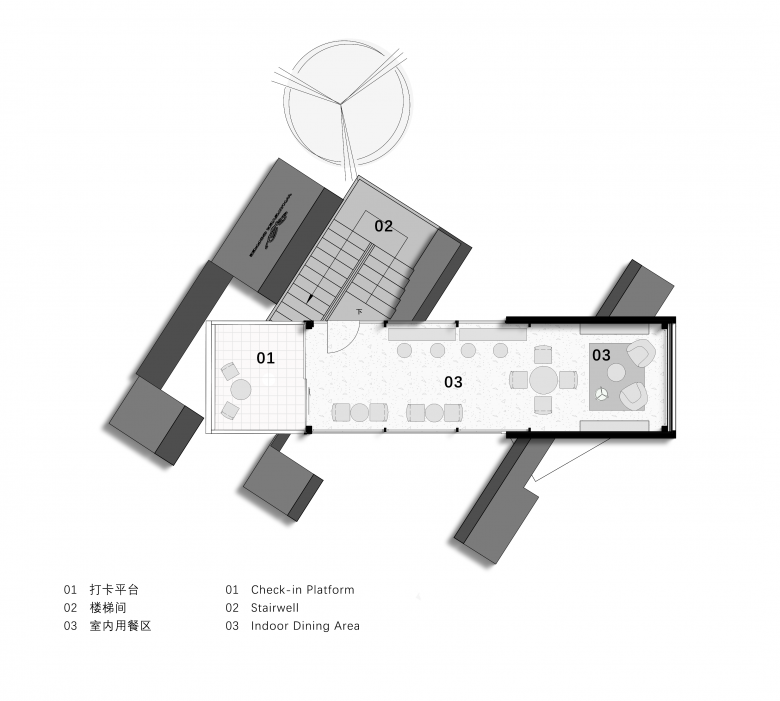
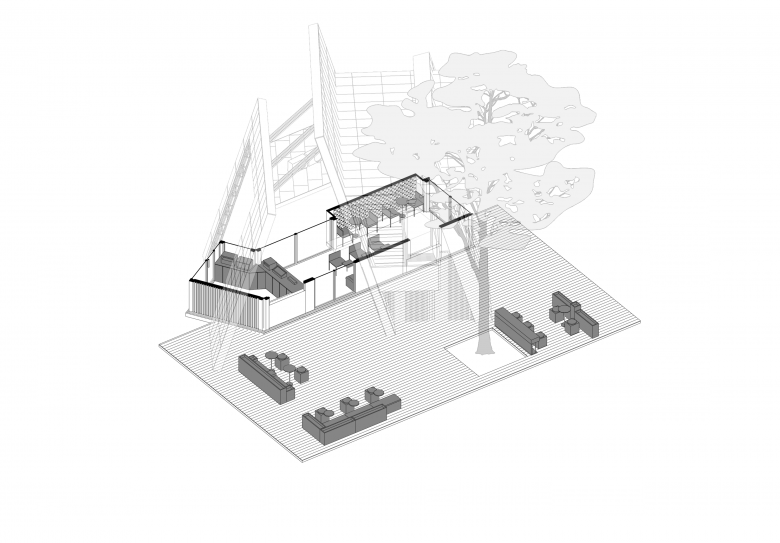
The external staircase is embedded at an angle in the gap between two walls, embodying the spatial narrative of upward exploration through cracks. Structurally, an additional horizontal steel frame installed on top of the original container secures the staircase to the main building, while also serving as a rain shelter. Air conditioning outdoor units are concealed within this frame to prevent equipment exposure from compromising facade integrity, thus achieving an integrated design that unifies structure, function, and aesthetics.
The inclination angle of the wall panels echoes the staircase slope both visually and structurally, and the horizontal steel frame connects the three components into an organic whole. This design not only reinforces the spatial logic of growth from cracks but also leverages steel structural elements to form a Brand Creative Merchandise
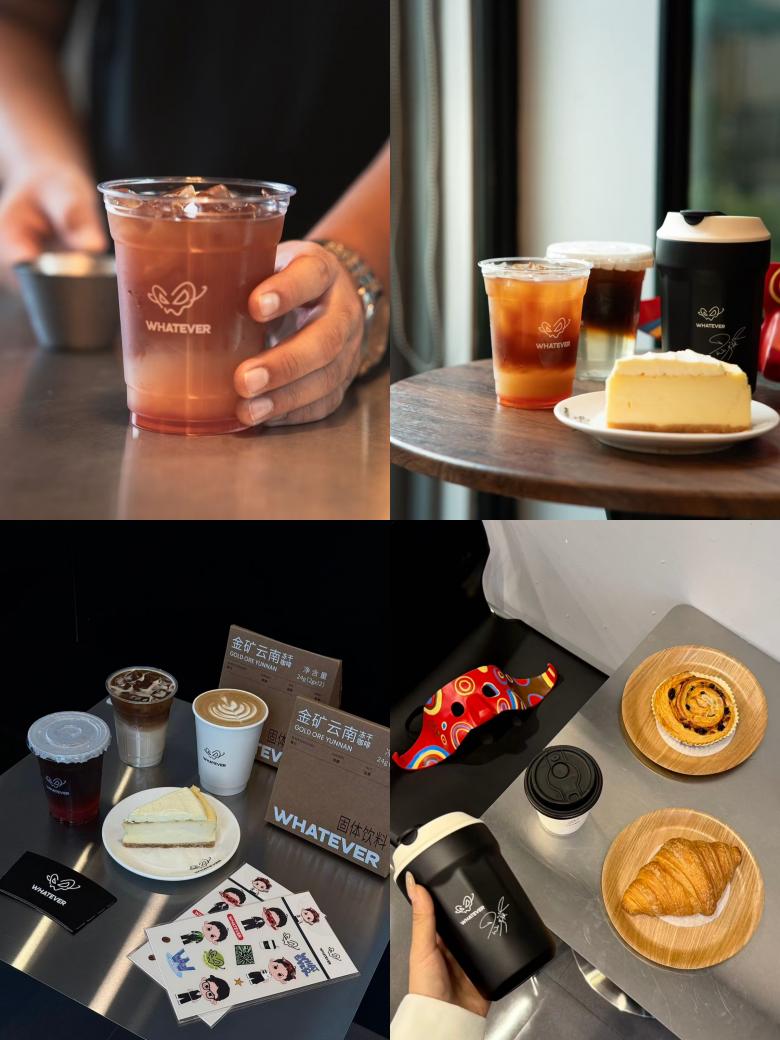
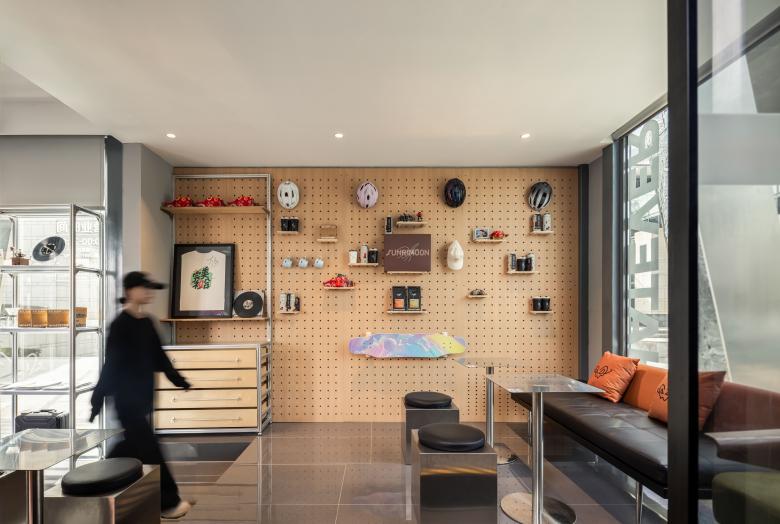
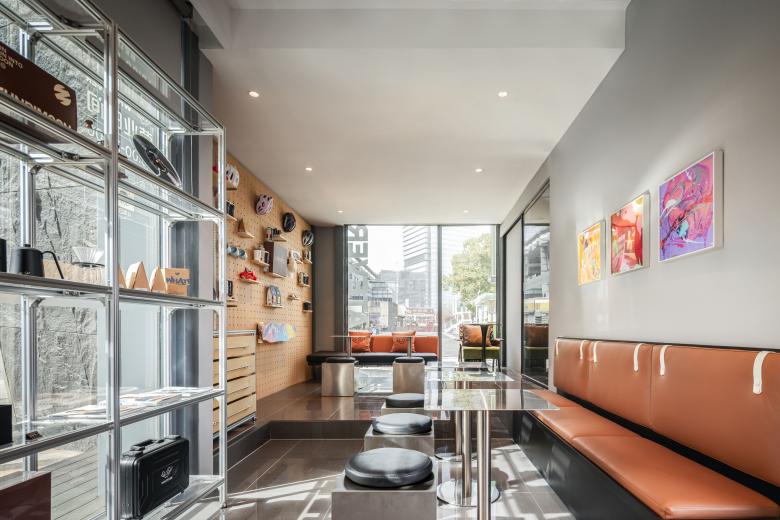
Daniel Wu’s coffee philosophy is embedded in cultural and creative details, where a free-spirited texture blends seamlessly with functional aesthetics. Brand merchandise such as masks and mugs serves as portable emblems of its ethos, keeping the memories of urban café moments close at hand.
Public Seating
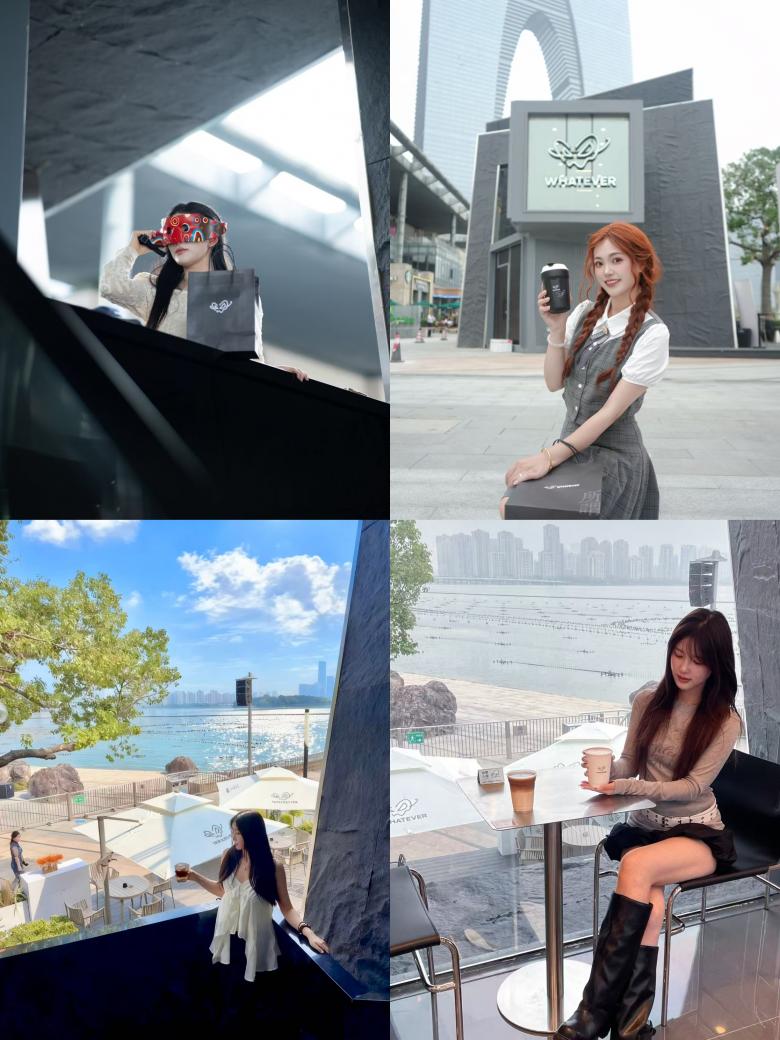
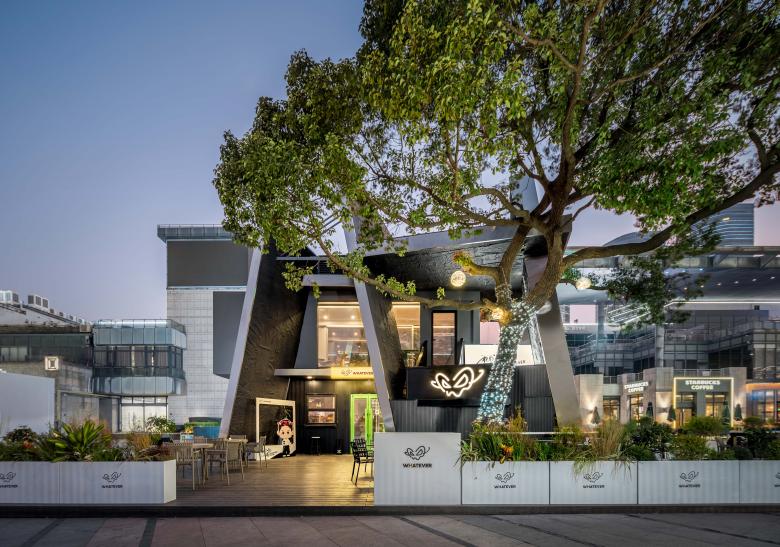
Public seating, akin to resting spots sprouting from cracks, is flexibly arranged to leverage spatial corners and viewing advantages, creating social hubs that balance functionality with visual appeal. These areas not only cater to daily dining needs but also offer diverse photo opportunities for young people through the uniquely partitioned nooks. They foster natural interactions among visitors, serving as dynamic stages for new urban social narratives that align with the social habits and aesthetic preferences of the younger generation.
Night ambience
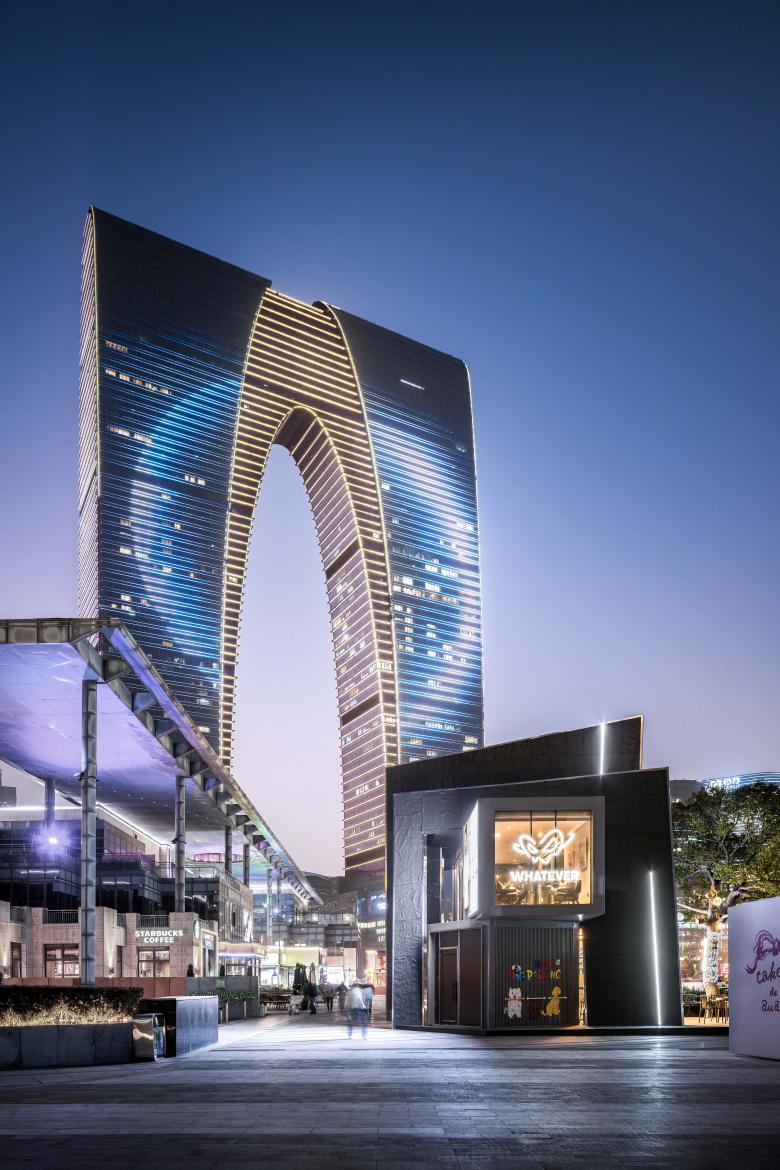
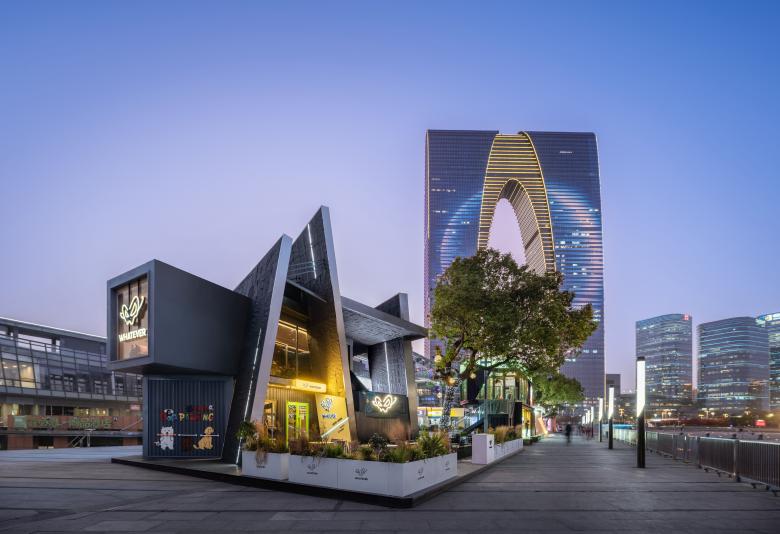
Night lighting centers on light strips, precisely installed along the building’s contours. It outlines the dynamic deconstructed form of the structure to reinforce the urban cracks theme, casting soft, layered light and shadow. As night falls, flowing light glides across the facade, imbuing the building with vivid vitality in the dark—like a beating pulse in the urban fabric. This not only creates a youthful ambiance true to the brand identity but also elevates the structure into a rhythmic, vibrant highlight of the city’s nightscape.
In the fissures along the lakeshore, the city is redefined.
In the intervals of coffee time, life finds a new rhythm.

- Jahr
- 2025
- Project Status
- Gebaut
- Team
- Fang Yujie, Hong Jiamei, Zhang Ying